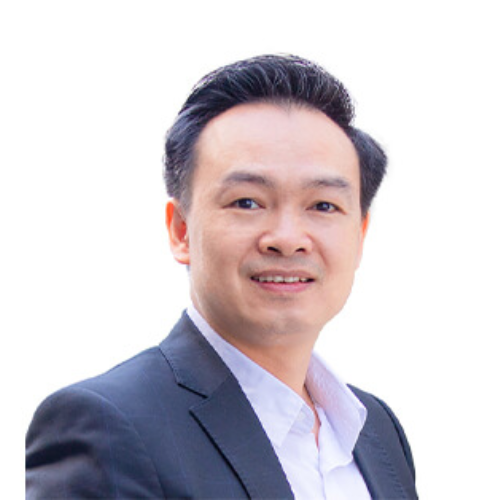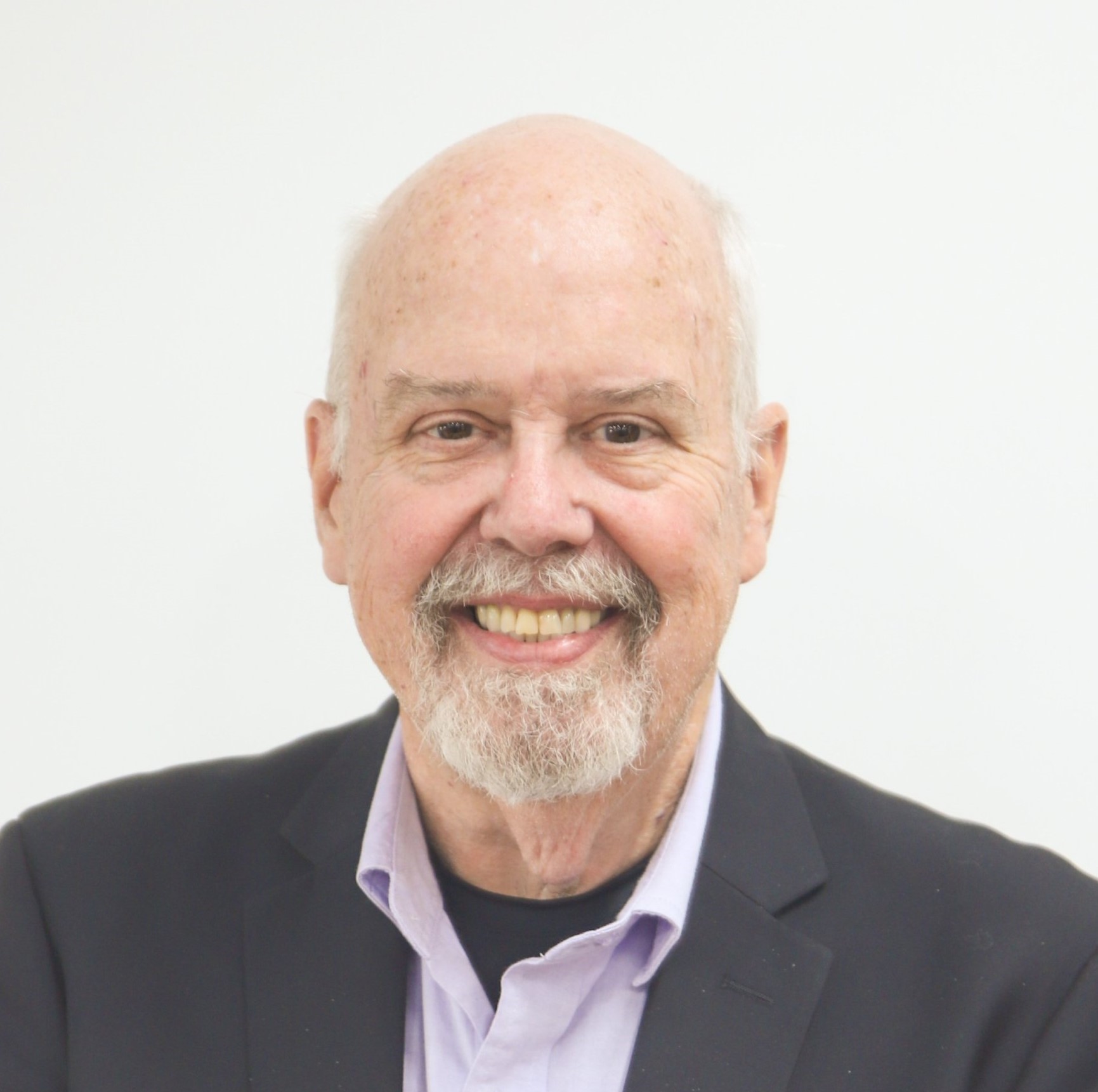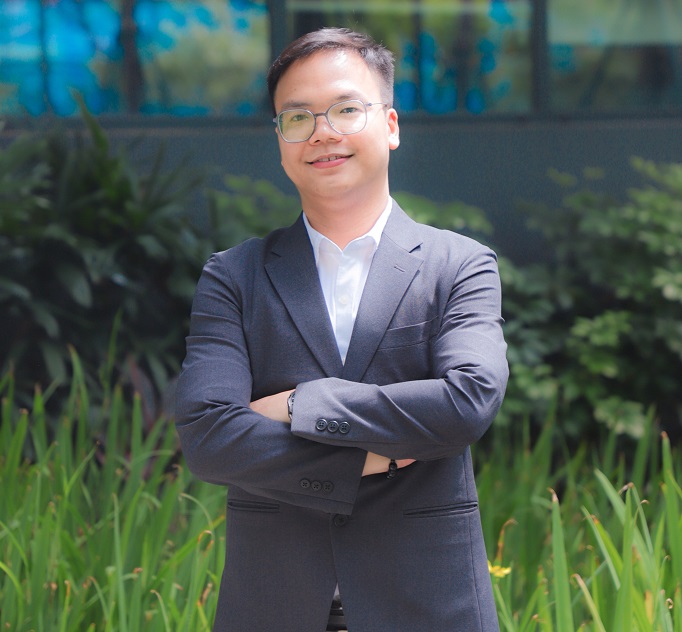

For Mr. Paul, Humanities Teacher at The Dewey Schools Tay Ho Tay, the path into education may have begun long before he ever set foot in a classroom. Growing up in a family of educators, he was surrounded from an early age by stories of classroom life, a passion for nurturing young minds, and the quiet joy of watching students grow.
Over time, those stories shaped his belief that education has the power to help people understand themselves more deeply and transform the way they see the world.
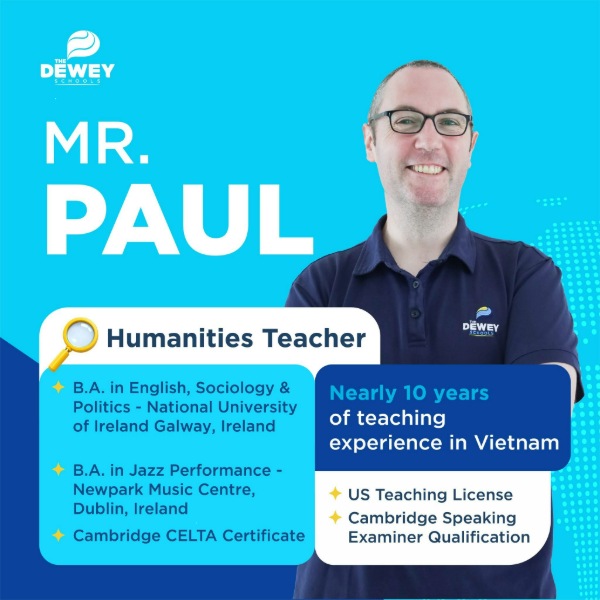
Perhaps that is why, even after nearly a decade of teaching in Vietnam, Humanities remains the subject closest to his heart. What makes it so compelling to him is not simply the way it brings together history, literature, art, and philosophy. It is that all these disciplines circle back to one enduring question: Who are we?
Every historical event, literary work, and philosophical perspective offers a glimpse into how people think, make choices, and navigate different circumstances. Rather than leading students toward a single “right” answer, Humanities invites them to step into someone else’s shoes. When their own views meet perspectives unlike their own, students are encouraged to examine their assumptions, reconsider their beliefs and choices, and ask themselves: What has shaped the person I am today?
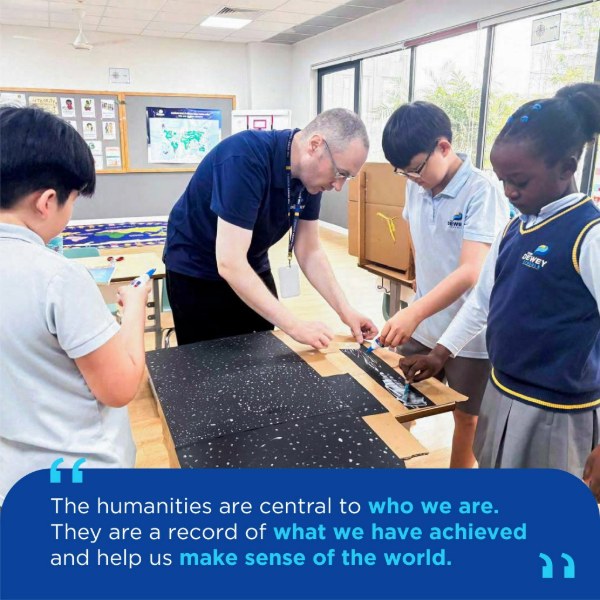
That is the kind of thinking Mr. Paul hopes to spark in every lesson. For him, a Humanities lesson truly comes alive when students can connect with it in their own way. From that point of connection, knowledge becomes more than information. It becomes a lens through which students can reflect on who they are, make better sense of the world around them, question what may once have seemed self-evident, and approach different perspectives with respect rather than judgment.
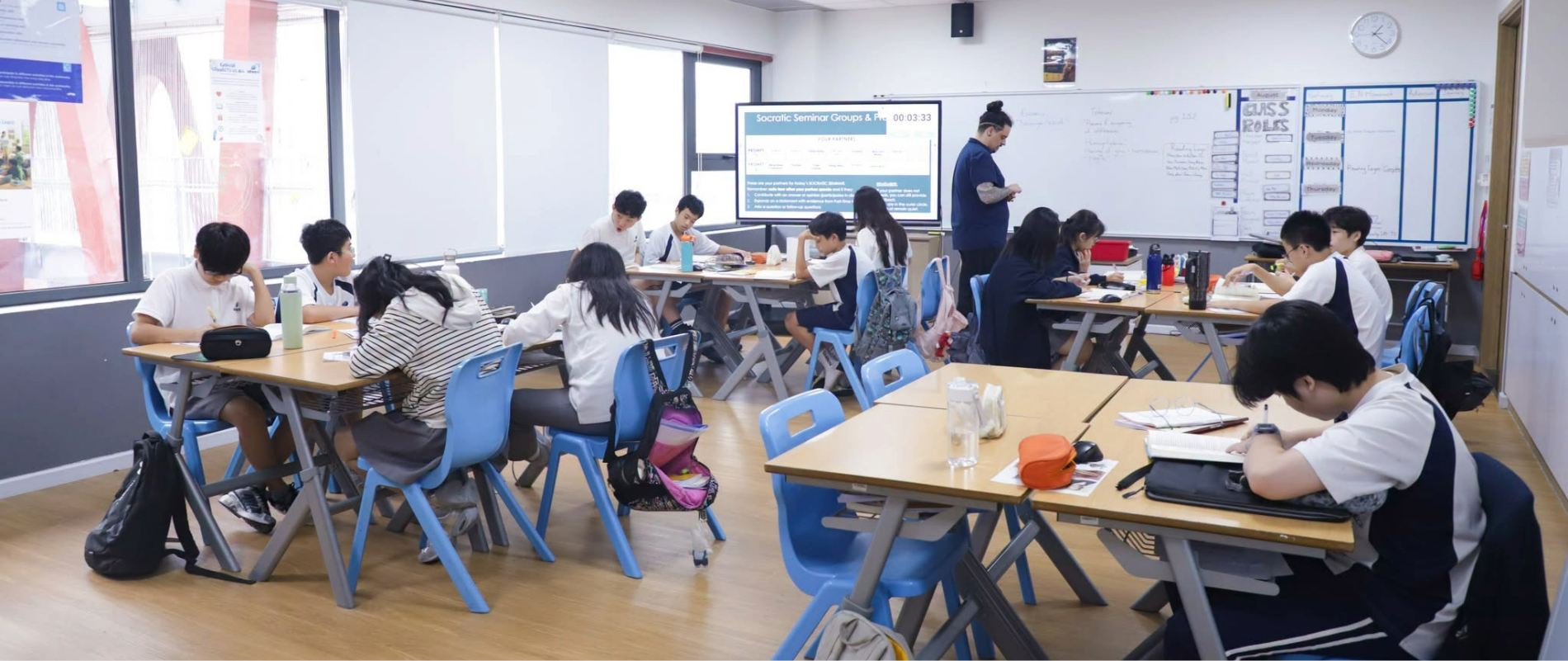
This belief shapes the way he designs his classroom, with students taking center stage in every learning experience. Some lessons open with an open-ended question; others are sparked by powerful visuals, lively debates, games, or interactive activities. Whatever the starting point, the purpose remains the same: to create space for students to think deeply, reflect with intention, and arrive at perspectives of their own.
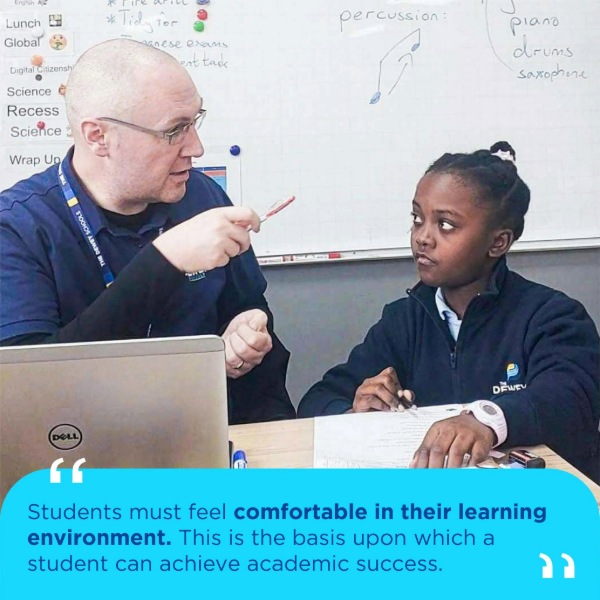
Reflection also plays an important part in Mr. Paul’s own practice. After every lesson, he takes a step back and asks himself the same question: Could there be an even better way to help my students connect with what they are learning?
In just two years at Dewey, Mr. Paul has found a genuine sense of belonging in a community brought together by collaboration and a shared commitment to nurturing students who are ready to navigate and help shape a changing world.
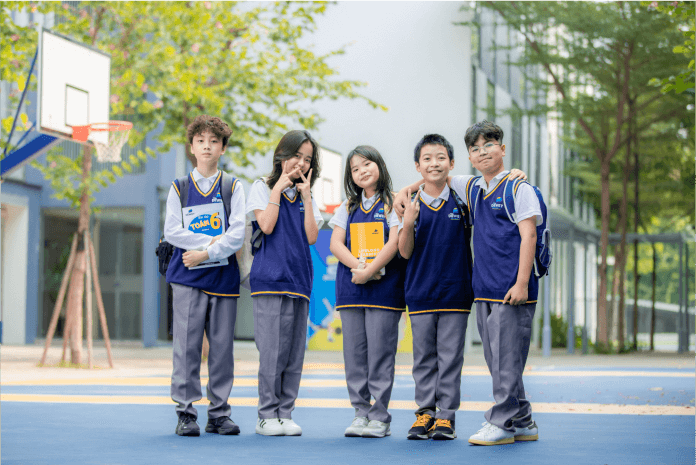
Dewey’s multicultural environment adds another layer of depth to Humanities. With students from different countries and cultural backgrounds learning alongside one another, lessons about difference no longer remain confined to the pages of a textbook. Every conversation, collaborative project, and shared classroom experience becomes an opportunity to listen, understand, and learn from ways of seeing the world that may be very different from one’s own.
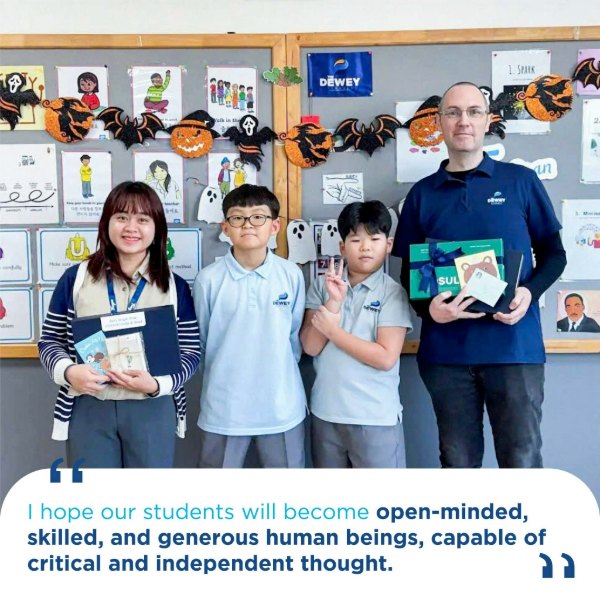
For Mr. Paul, this is Humanities in its most authentic and vibrant form: alive in the questions students ask, the perspectives they exchange, and the connections they build with one another.
Above all, Mr. Paul hopes that each Humanities lesson helps students take another step toward becoming kind, resilient, and responsible global citizens. For him, that journey begins close to home: with each student understanding who they are, knowing what they believe in, and using that self-awareness to build meaningful connections with the world around them.