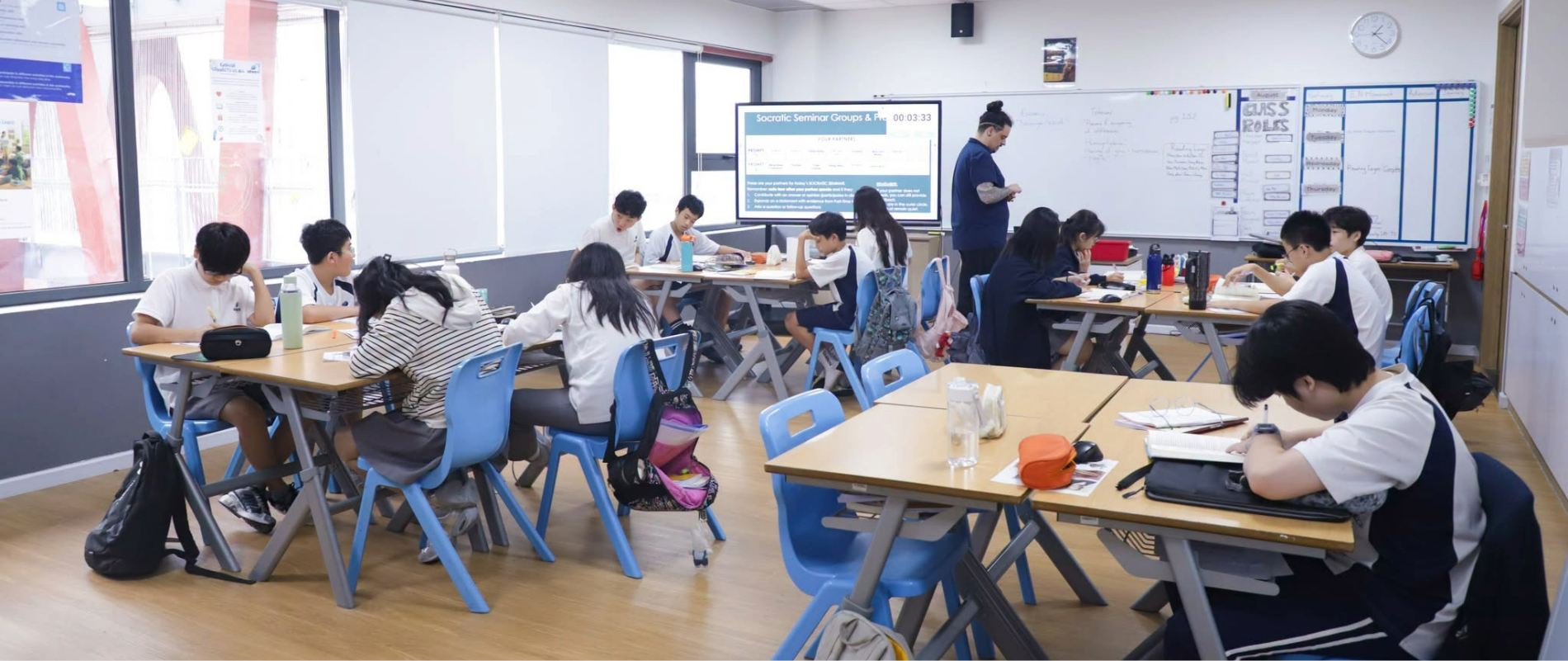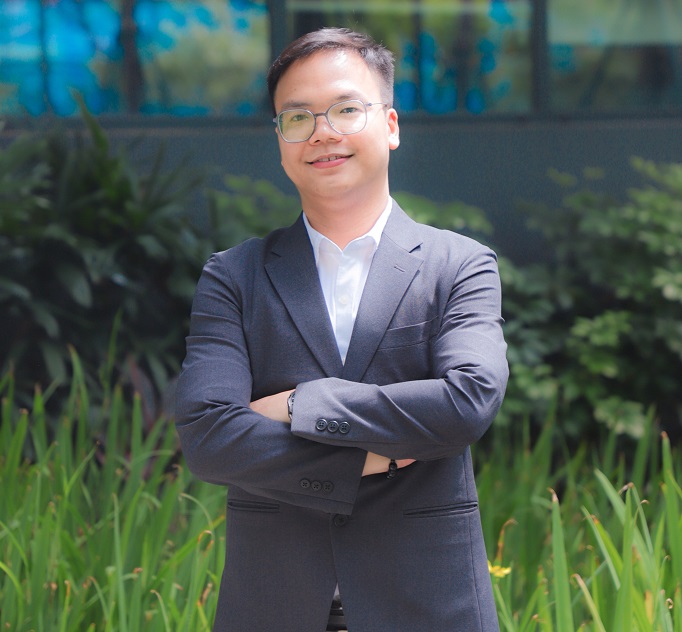

For Mr. Patrick, what makes teaching so special is seeing a child’s eyes light up at the moment of discovery—when a concept suddenly clicks, a long-held question finds its answer, or a student simply realises, “I can do this.” He loves sharing knowledge and opening the door to new experiences for his students each day.
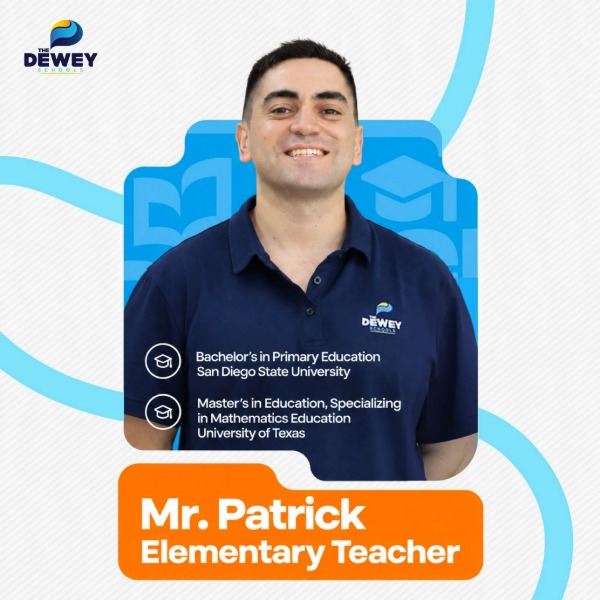
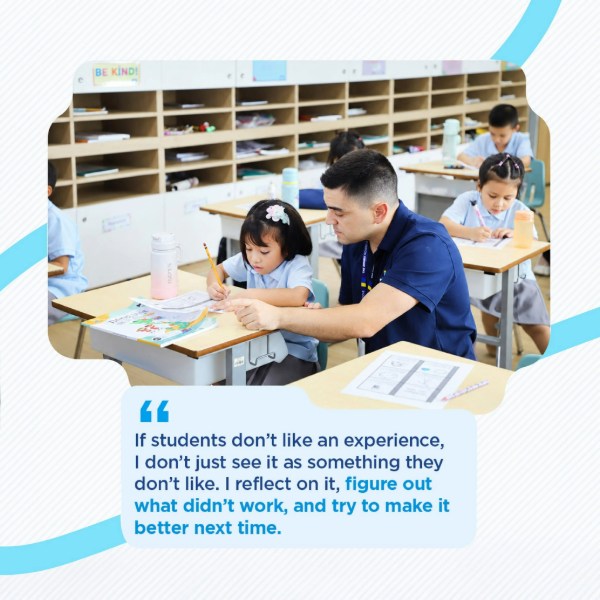
Perhaps that is why he wants every lesson and school experience to become a positive memory—one that sparks curiosity and keeps the joy of discovery alive. When a student feels hesitant or is not yet ready to embrace something new, Mr. Patrick does not push. Instead, he pauses to observe and reflect: Is the task too challenging, or perhaps not challenging enough? Has the idea been presented in a way that truly meets the student’s needs?
He then adjusts accordingly—simplifying certain elements, changing the way students interact with the task, or breaking the challenge into more manageable steps—so that the next lesson feels more accessible and meaningful. Ultimately, he wants every student to find an approach that works for them, giving them the confidence to try and gradually move beyond their comfort zone. This closely reflects Dewey’s approach to differentiated learning and is perhaps one of the reasons he felt such a strong connection with his new school community.
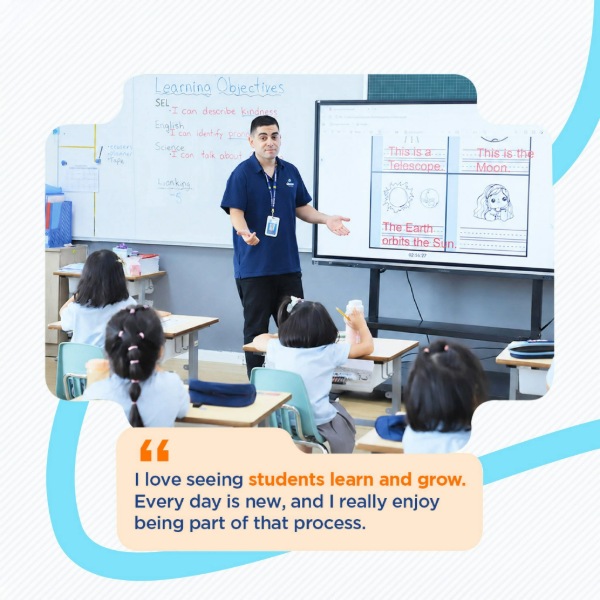
After more than a decade in education, Mr. Patrick believes that a child’s earliest years at school are especially formative. This is when students begin developing the habits, ways of thinking and approaches to learning that may stay with them for years to come. For that reason, grades and academic achievement have never been his only measures of success.
Character comes first. Mr. Patrick hopes to nurture students who are kind and respectful towards others. As he puts it, knowledge only has true value when it is accompanied by humility, an open mind and the ability to reflect on oneself. He wants his students to understand that mistakes are not failures, but a natural and necessary part of growing. His goal is to create a safe environment where they feel able to acknowledge when they are wrong, remain open to different perspectives and make the changes needed to become better versions of themselves.
Ultimately, what Mr. Patrick hopes his students will carry with them beyond their primary years is not simply what they have learnt from books, but the ability to learn independently and the qualities that shape who they become: kindness, patience, respect and an open mind towards the wider world.
To him, learning is an ongoing journey of trying, stumbling, reflecting and moving forward. When that foundation is laid carefully from the very beginning, children are better equipped to find their own way—and to walk it with confidence.