
“If one day fossil energy resources around the world are depleted, what will humanity choose to continue developing?” A question seemingly reserved for global scientific conferences became the starting point of the interdisciplinary project “Energy for the Future” for Grade 5 students at The Dewey Schools Hai Phong.
In this project, students did not approach knowledge through passive learning, but were placed in the role of problem-solvers – “Earth-protecting superheroes” tasked with researching, analyzing, and proposing sustainable energy solutions for the future. Knowledge from Physics, Science, MDE, Visual Arts.., did not exist in isolation but was interconnected into vivid, highly applicable learning products.
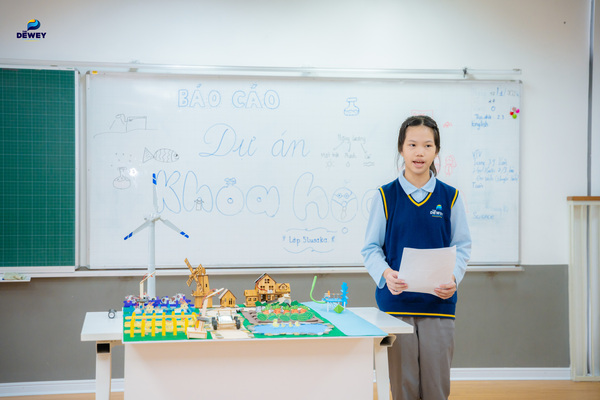
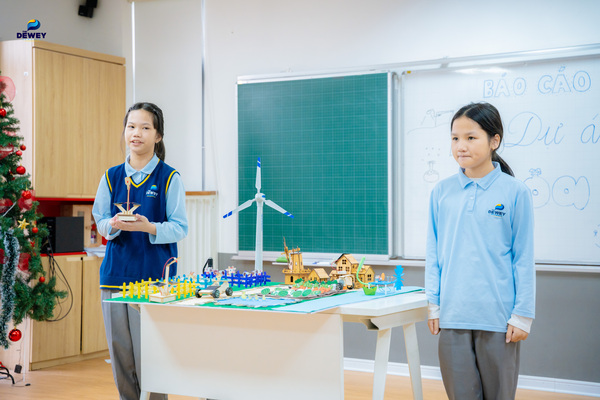
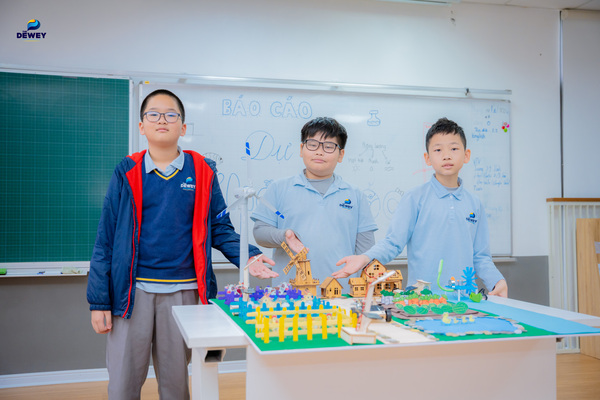
Research ideas were brought to life through visual models: tiny wind turbines powered by wind energy, rooftop solar panel systems capable of generating electricity, demonstrated by small light bulbs continuously glowing. Alongside these were diverse learning products such as creative drawings, carefully designed presentation slides, and students’ clear, logical articulation when presenting and defending their viewpoints.
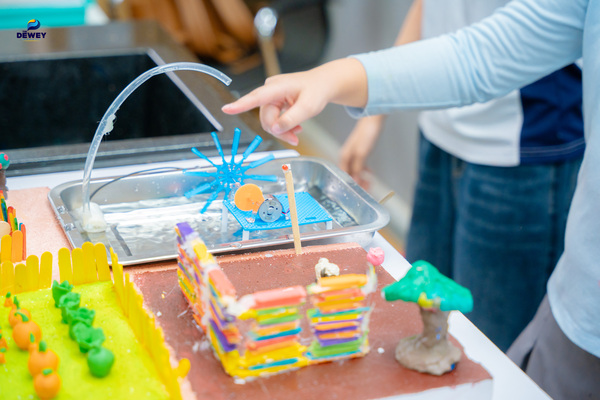
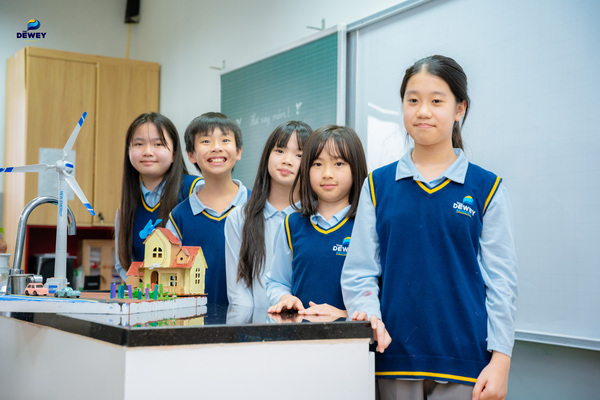
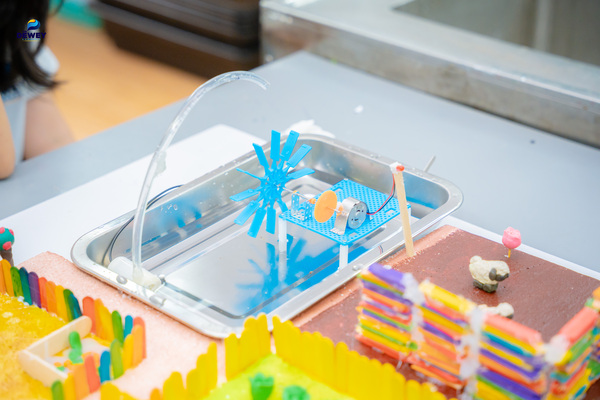
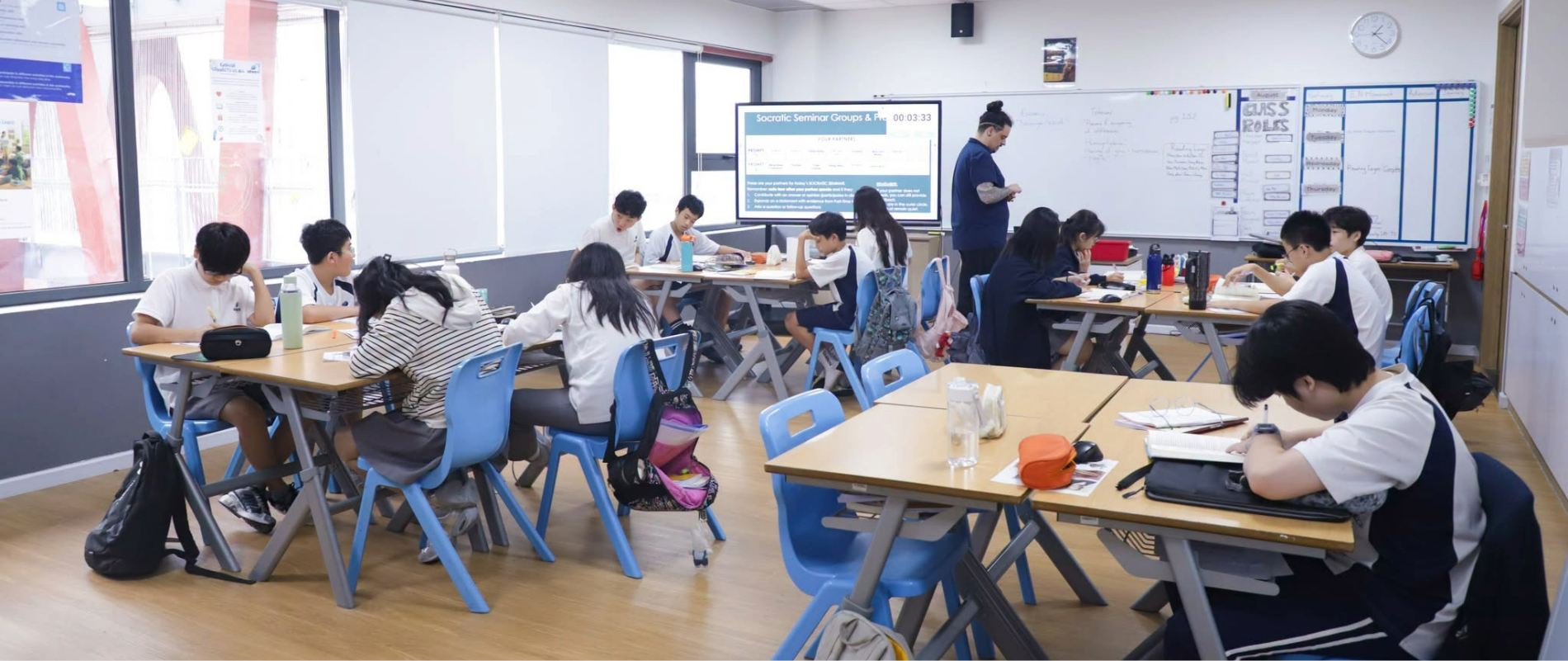
Most notable was the open academic atmosphere, where every idea was questioned and debated: “I’m wondering, why do solar panels generate electricity so well, yet you say they are not widely favored?” – “Because their lifespan is only about 10–15 years, recycling remains challenging and may pose risks of adverse environmental impacts.” These exchanges show that students did not stop at finding the correct answer, but began approaching issues through multi-dimensional thinking, weighing benefits, limitations, and long-term impacts.
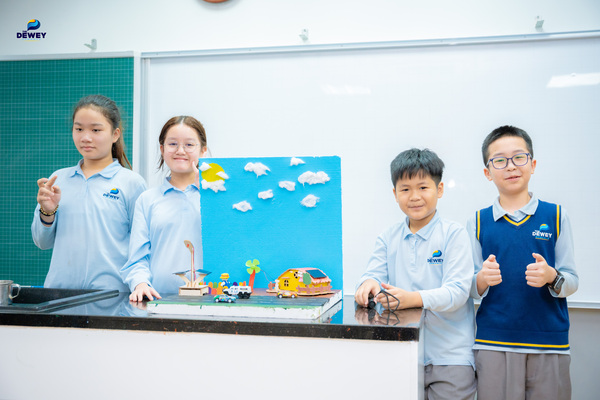
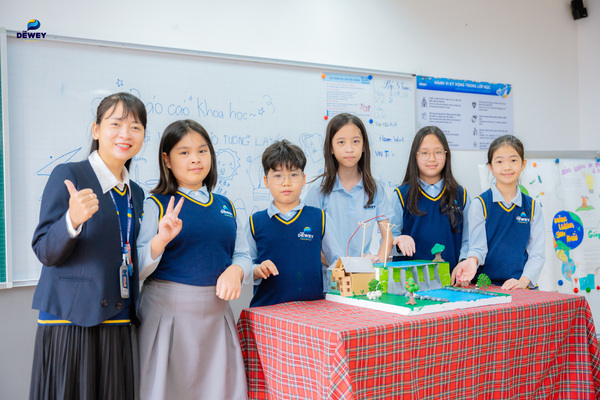
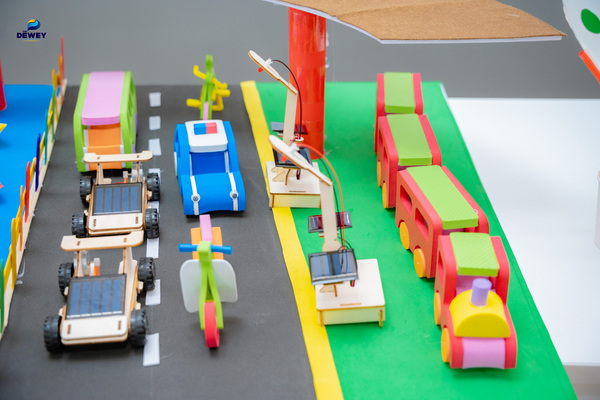
The interdisciplinary project thus became a space where students were allowed to ask questions, experiment, make mistakes, and defend their viewpoints. Each lesson became a journey: from hands-on experience, to reflection, analysis through critical thinking, and validation through action.
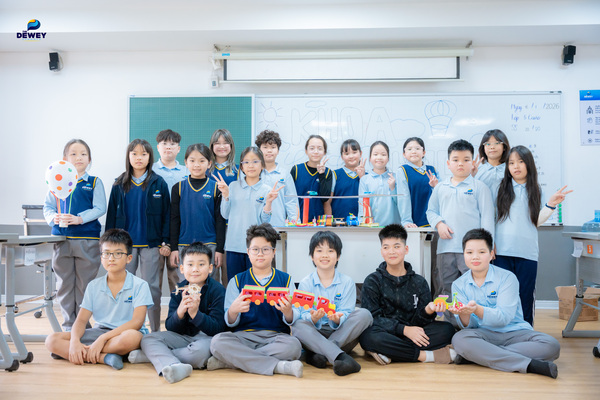
As the project concluded, what remained was not only knowledge about green energy, but more importantly, scientific research competence, a sense of responsibility toward the environment, and the belief that major changes always begin with small actions when we know how to ask questions and dare to seek answers for the future.