“Gazing at the dewdrops as they fall,
I sit and miss my dear mother most of all.”
These familiar-sounding lines weren’t copied from a textbook. They were written by a TDSer after exploring how Vietnamese folk poetry uses everyday images to express longing, affection, and feelings that can be difficult to put into words.

These original verses became part of a mini poetry exhibition held during a Vietnamese Literature lesson. Each A5 sheet featured a folk poem written by a student, alongside an analysis of a folk poem they personally enjoyed. Students walked around the classroom, reading one another’s work, discovering different interpretations, and leaving feedback.
Before putting pen to paper, students explored familiar opening patterns in folk poetry, such as “Chiều chiều…” and “Buồn trông…”. They looked closely at rhyme, rhythm, imagery, and the simple yet expressive language used to convey emotions and inner thoughts. Drawing on these observations, each student tried their hand at writing an original lục bát poem, a traditional Vietnamese verse form built around alternating six- and eight-syllable lines.
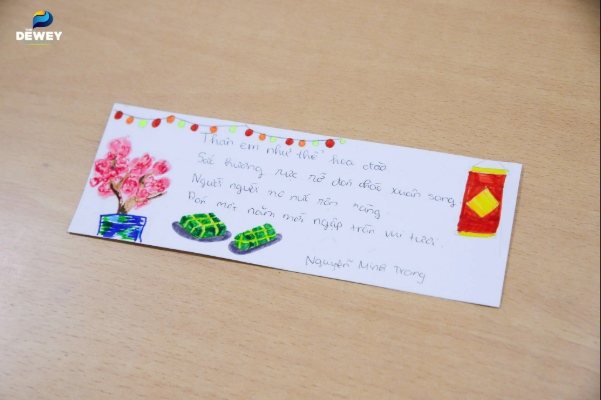
Analyzing a favorite folk poem also encouraged students to look beyond the words on the page. One might focus on a particular image, another on the rhythm, while someone else might discover an emotion that others had overlooked. By sharing their interpretations, students gained fresh perspectives and found new ways to reflect on their own writing.
Through reading, analyzing, and creating poetry of their own, students discovered that Vietnamese folk poetry is more than a collection of verses passed down through generations. It offers a window into the feelings and experiences of Vietnamese people, while showing students how language can help them recognize and express emotions in their own unique ways.
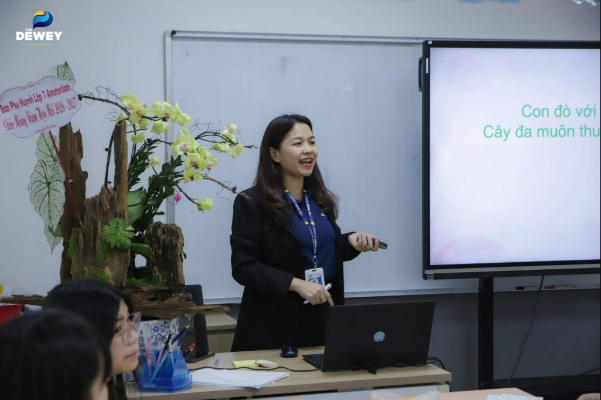
Learning literature means discovering what people of the past left between the lines, while gradually finding the words to tell our own stories.