
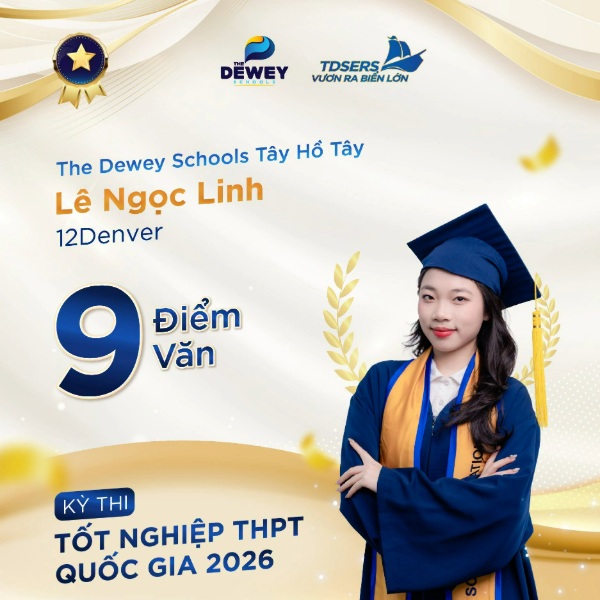
35% of Grade 12 students at The Dewey Schools Tay Ho Tay achieved scores of 8.0 or above in the 2026 National High School Graduation Examination for Literature, with top performers earning outstanding scores of 9.0–9.25—an exceptional accomplishment in a year when scores above 9 were remarkably rare nationwide.
Although education experts described this year’s Literature examination as highly challenging and strongly differentiated, the open-ended format once again became an opportunity for Dewey students to demonstrate the very competencies they have cultivated throughout their learning journey: independent thinking, critical analysis, persuasive argumentation, and a broad understanding of society.
The examination’s use of texts beyond the prescribed curriculum and its focus on contemporary issues such as technology, artificial intelligence, and the role of humanity made it clear that success required far more than memorized knowledge. Students needed the ability to interpret, think critically, construct logical arguments, and connect literature with real-life issues.
These are precisely the competencies that lie at the heart of Dewey’s Vietnamese Literature and Language curriculum.
Rather than focusing solely on literary knowledge, Dewey’s curriculum encourages students to explore the deeper dimensions of thinking. Literature becomes a lens through which they examine humanity, society, and the world around them. Guided by essential concepts such as Knowledge, Ethics, and Aesthetics, students are encouraged to ask meaningful questions, engage in dialogue with literary works and real-world issues, and develop critical thinking, analytical reasoning, and the ability to approach complex topics from multiple perspectives.
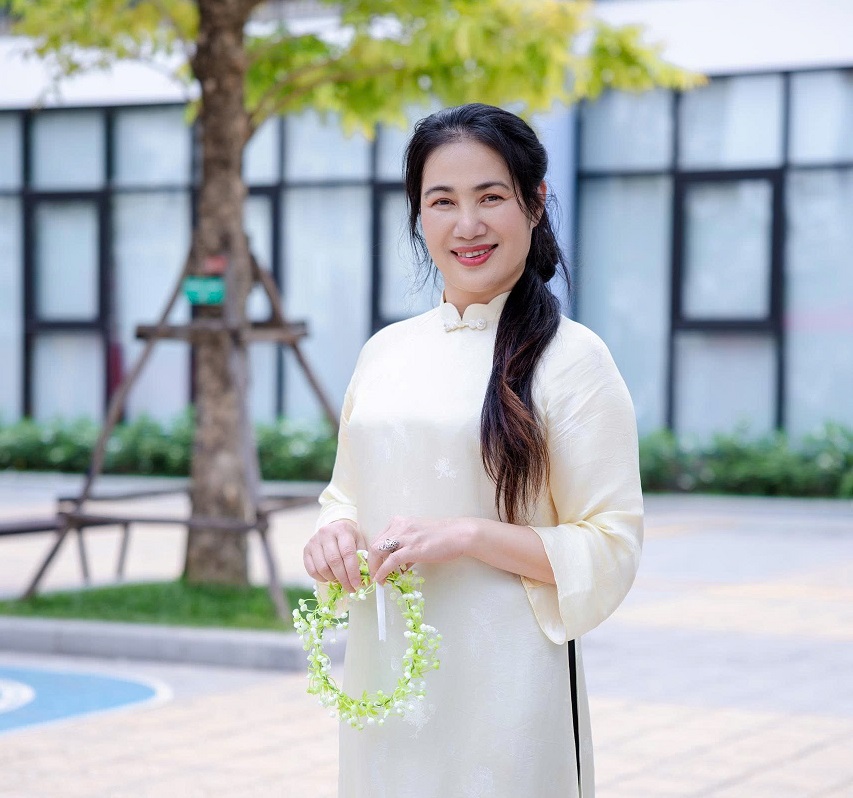
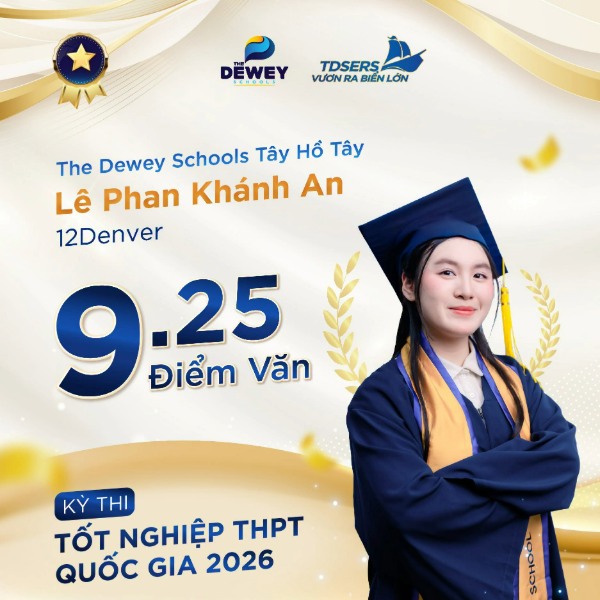
This was exactly how Lê Phan Khánh An (12Denver)—who achieved an impressive 9.25 in Literature—approached this year’s examination.
In the literary analysis section, rather than simply interpreting the image of the leaf in Nguyễn Đình Thi’s poem Leaves, Khánh An drew insightful connections to Xuân Diệu’s artistic philosophy, highlighting the transformation from the individual self toward a life devoted to contributing to the community. Her ability to make meaningful connections, broaden the discussion, and develop sophisticated arguments gave her essay both intellectual depth and a distinctive personal voice.
Khánh An shared that she never relied on model essays or exam “shortcuts.” Instead, she developed the habit of recording passages that resonated with her, reading widely beyond the required curriculum, and actively reflecting and engaging in classroom discussions. These experiences enabled her to confidently connect ideas and build coherent, authentic arguments during the examination.
At Dewey, learning Literature extends far beyond reading and writing.
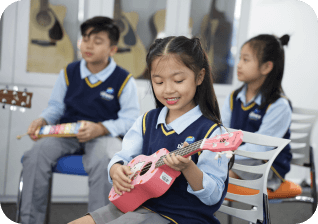
Through Inquiry-Based Learning (IBL) and Project-Based Learning (PBL), students transform literary perspectives into short films, podcasts, exhibitions, research papers, and community projects. Literature therefore moves beyond the pages of a textbook, becoming a powerful medium through which students observe humanity, engage with society, and gain a deeper understanding of themselves.
This year’s examination results mark a proud milestone for the Dewey community. More importantly, however, they reflect a much larger educational vision.
At Dewey, our ultimate goal is to nurture learners who are willing to ask meaningful questions, think independently, challenge conventional perspectives, defend their ideas with confidence, and write about the world with sincerity, empathy, and responsibility.
These are the competencies that empower our students not only to excel in examinations, but also to become globally minded citizens who are prepared to learn continuously, adapt confidently, engage thoughtfully in dialogue, and create positive impact in an ever-changing world.