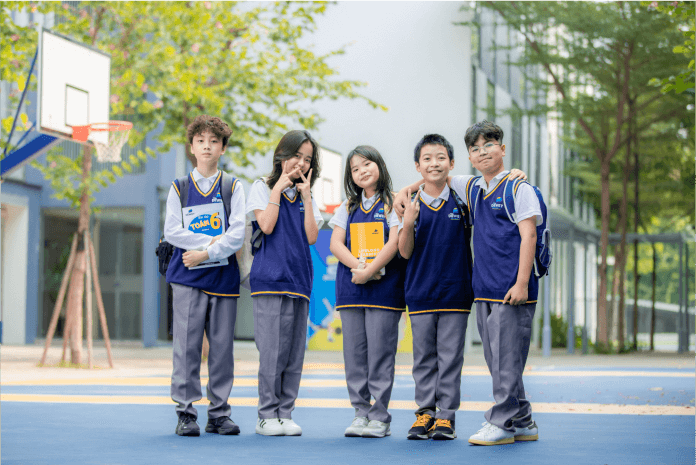

After a school year, what has your child learned, and how have they changed? At the “End-of-Year Showcase” of The Dewey Schools Cau Giay Secondary and High School, the answer did not lie on a report card, but was revealed through stages, projects, products, and student-led dialogues. This is where TDSers connect knowledge with life, transforming experiences into mindsets, perspectives, and inner capacities.
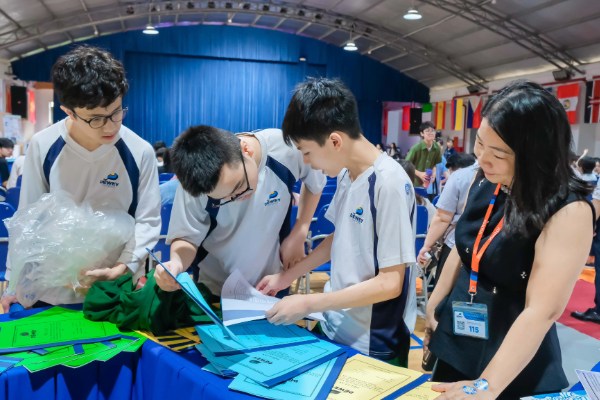
One of the spaces attracting the most attention this year was “The Expo”—an exhibition showcasing products and ideas developed by students throughout the school year, ranging from technology and science to history, culture, art, or social issues.
Here, students directly led their parents into the exhibition space. They did not just present the “final product” but retold the entire journey behind each idea: which questions they started with, how they experimented, where they failed, and what they learned after each adjustment. At this point, students were no longer merely “reporting lessons,” and parents were not simply “viewing products.” The exhibition became a true meeting of minds, where parents could see how their children think, feel, and view the world.
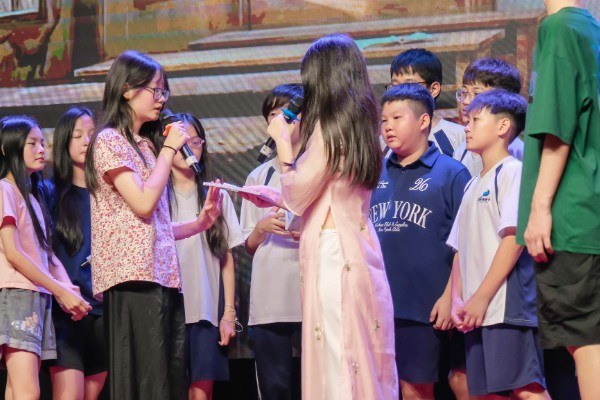
While “The Expo” demonstrated a Dewey Cau Giay rich in creative spirit, “The Silent Voices” stage opened up another depth: listening and empathy. Here, literature was brought to life through music, light, movement, and the students’ own emotions. However, the most valuable aspect lay not in how accurately they portrayed the characters, but in how they paused enough to truly understand the life of another person.
In “The Story of the Woman of Nam Xuong,” they felt Vu Nuong’s injustice behind prejudices and suspicions. With “Les Misérables,” they touched the fates of those pushed to the margins of society. Meanwhile, “The Ivory Comb” took the audience through a very different perspective on war, not through bombs and bullets, but through an unfinished embrace, a late call for “father,” or a loving comb that could not be handed over in time.
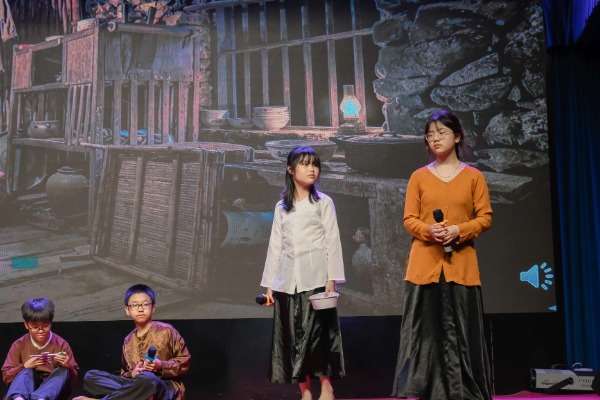
Each work came from a different era and culture, but when they appeared together on the Dewey stage, they all met at a common point: helping students understand that behind every destiny, there is always a story that needs to be listened to with empathy and respect.
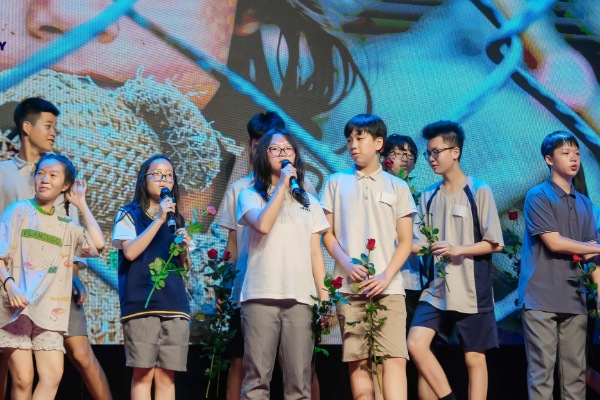
Perhaps, in an increasingly “AI-ified” world, education needs to bring humans back to the depth of thinking and empathy. The ultimate destination is to help students know more or do better, while creating pauses for them to reflect, learn to think deeper, know how to put themselves in others’ shoes, dare to raise their voices against injustice, and above all, live kindly. That is when knowledge truly becomes meaningful.