
How can a natural water filter be created in the wild?
What does nature’s “precious medicine” look like?
After traveling nearly 200 kilometers to Ba Vì National Park – the “green lung” of Hanoi – Grade 9 students from Dewey Hải Phòng stepped into a special “survival classroom” surrounded by majestic nature. With no air conditioners or electronic devices, the whiteboard was replaced by lush green canopies, turning the forest itself into a classroom where knowledge about plant ecosystems and survival skills cameto life in the most authentic way.
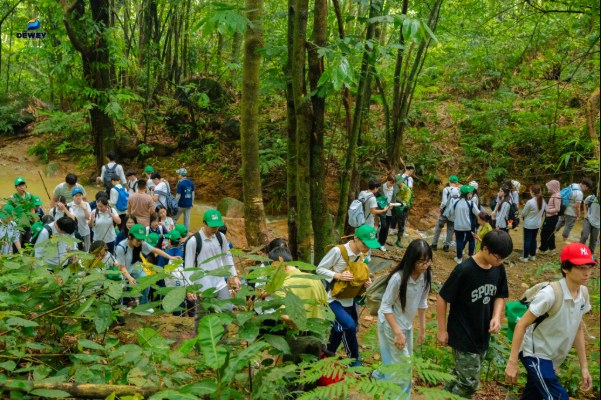
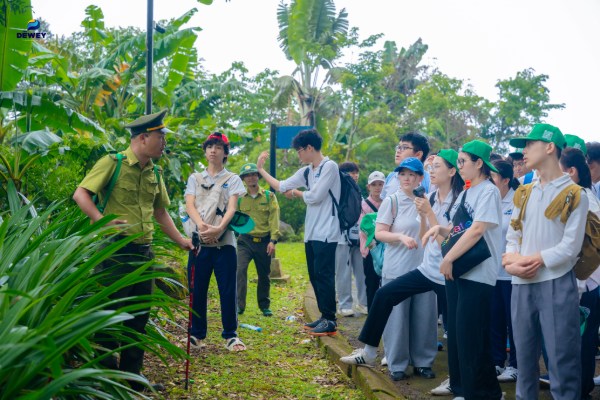
Deep in the forest, every plant seemed to carry its own “survival code.” Wild banana plants, with their slightly sour and nutty taste, can serve as a nutritious food source in nature. Meanwhile, giant taroleaves, despite their harmless appearance, may cause skin irritation upon contact, while their roots have long been used in traditional remedies to reduce fever and relieve joint pain. No longer limited to textbook illustrations, students were able to observe, touch, and explore the natural world through hands-on, multi-sensory experiences.
After trekking through forests, crossing streams, and conquering challenging trails, the students continued their journey in the peaceful pine forest of Ba Vì. Using pine leaves, flamboyant leaves, and smallbranches collected along the way, they created unique “green artworks” filled with personal touches — meaningful keepsakes from their trip back to the city.
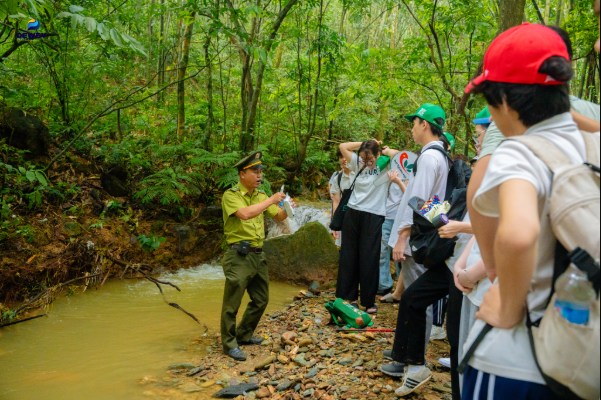
The special classroom in nature came to an end with unforgettable memories after every step of the journey. There were beads of sweat after steep climbs and moments when students held tightly ontotheir teammates’ hands to cross slippery streams together. Each challenge became a memorable experience, helping Grade 9 students better understand themselves, the power of perseverance, and the value of friendship during their final years of middle school.
Through these real-world experiences, students gradually developed adaptability, teamwork, and a stronger sense of environmental responsibility. More importantly, they gained a deeper appreciation fornature and the importance of protecting the ecosystems that continue to need our care every day.