
Analyzing food advertising posters may sound like an activity for Graphic Design students. But why does this topic appear in a Humanities class for Grade 7 students at Dewey Cau Giay?
Because in today’s world, information, media, and advertising shape how people think, consume, and make decisions every day. Understanding how these messages are created—and how they influence society—is an essential part of developing a modern human perspective.

Humanities is one of the seven integrated subjects in Dewey’s American curriculum. Instead of only approaching knowledge through textbooks, students explore real-world issues—from media and culture to social challenges.
In today’s lesson, TDSers begin by “breaking down” familiar food advertisements: Why does a hamburger in ads always look juicier and more appealing than in real life? Why do red and yellow tones frequently appear in fast-food chains? By comparing examples from different countries, students gradually realize that advertising does more than sell products—it also reflects broader issues such as consumer culture, public health, and media responsibility.
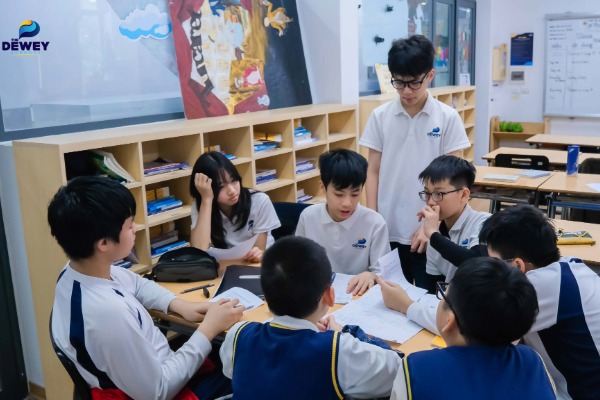
From these analyses, students take on the role of responsible media creators: designing posters, building more honest advertising messages, and promoting healthier lifestyles.
This is the experiential learning cycle—experience, reflection, and application—where students learn to ask questions, analyze critically, and construct their own solutions to real-life problems through intentionally designed activities and modern approaches such as inquiry-based learning and design thinking.
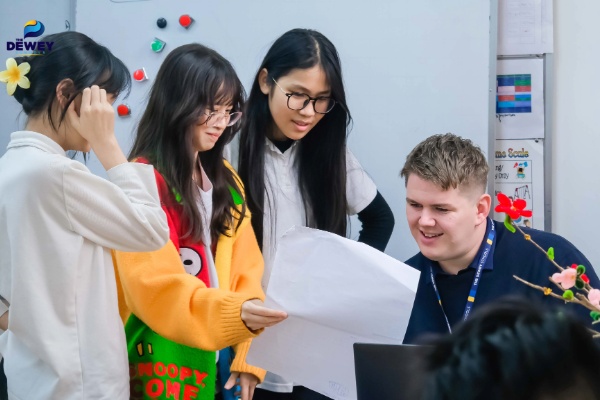
In a rapidly changing world shaped by information, technology, and media, what matters is not only knowing what is right or wrong. More importantly, it is the ability to think independently, to look deeply into the nature of issues, and to actively construct one’s own knowledge.
These are the essential qualities that empower Dewey students to step into the future as thoughtful, creative, and responsible global citizens.