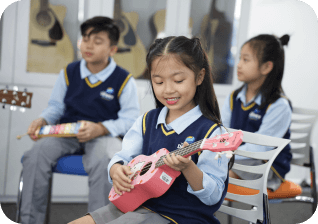
“How can we help a new student feel welcome in our classroom?”
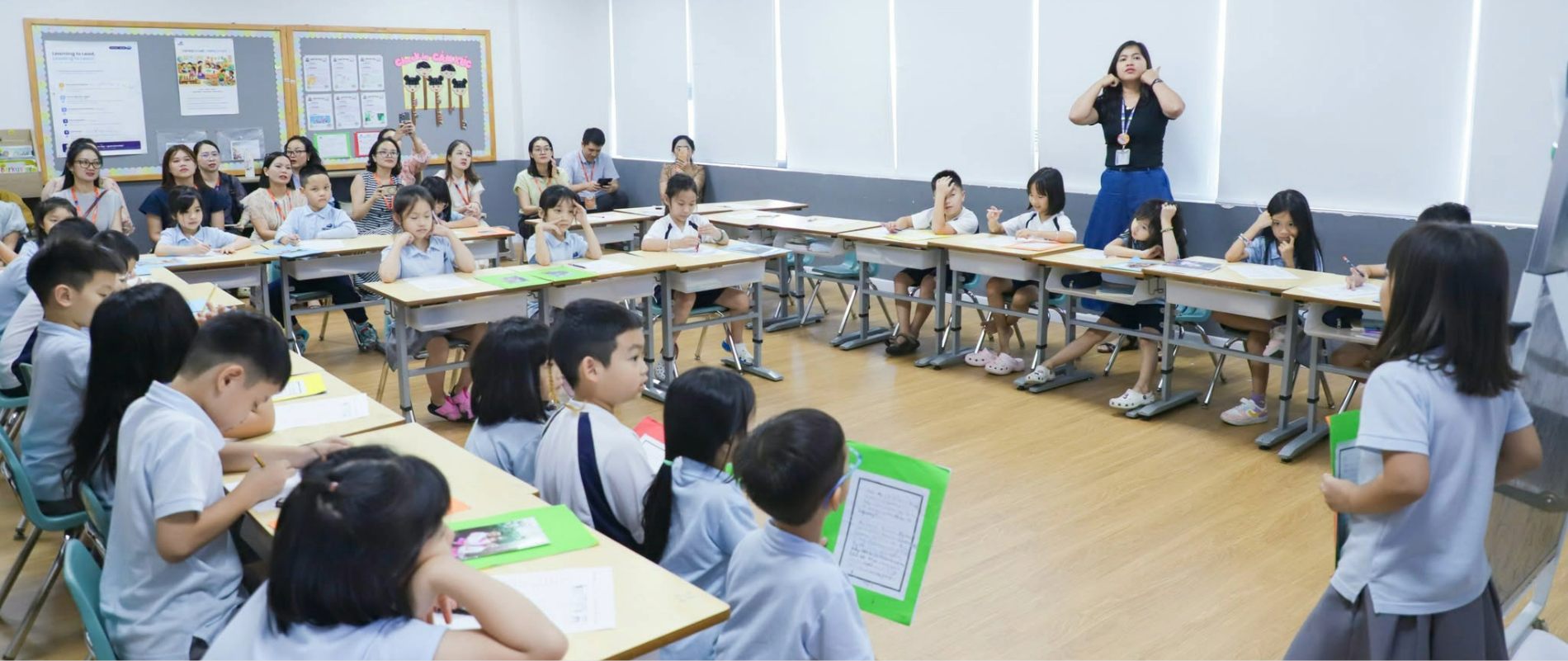
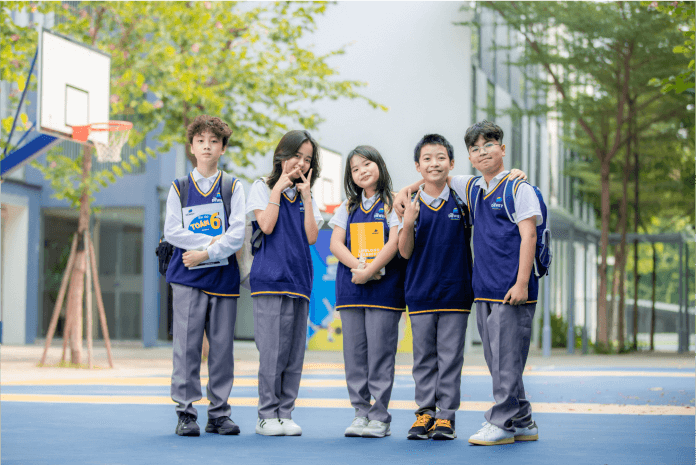
Standing in front of teachers, classmates, and parents, Dewey students shared their ideas on what they could do to help someone new feel included and cared for. An everyday classroom situation became something to think through, talk about, and solve together.
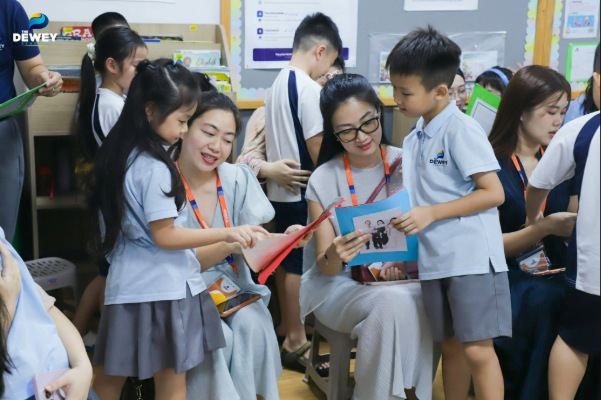
For parents joining Open House Week at The Dewey Schools, moments like these reveal things that grades alone cannot always show.
Does your child understand what they are learning? Can they organize their thoughts, explain their reasoning, and speak with confidence in front of others?
In Class 2 Osaka, learning began with family photos, drawings of home, and things the students had made themselves. As they presented in English, familiar vocabulary and sentence structures suddenly had a real purpose: helping them talk about their own lives to people who were there to listen.
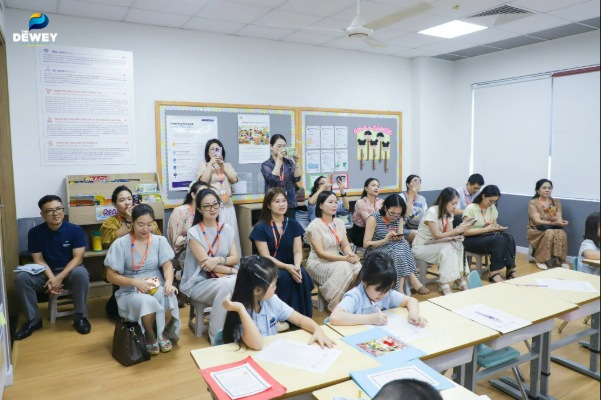
In another classroom, students became the planets themselves, acting out how the Solar System works. To make the scene work, they first had to understand the science — then explain it clearly enough for everyone else to follow.
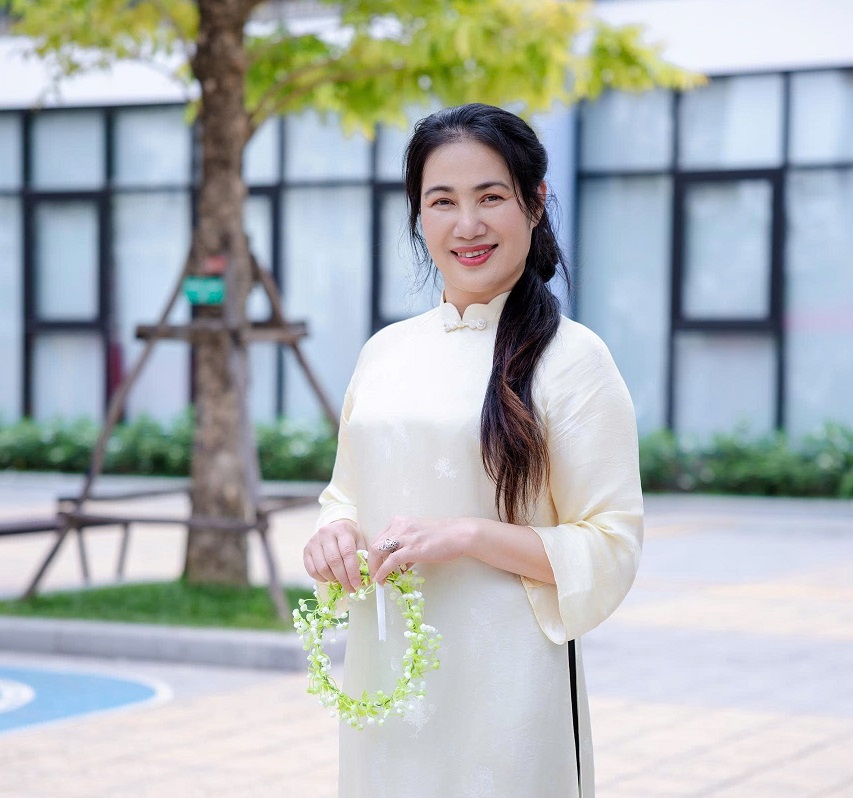
Watching from the classroom, Ms. Đặng Thu Hương, a parent of a student in Class 3 Dubai, noticed something different in her child:
“Watching my child present in front of the class, I realized how much more confident they have become when speaking in public. They can express their thoughts and share their feelings more comfortably, rather than simply listening and following instructions passively. That is the kind of growth I value most.”
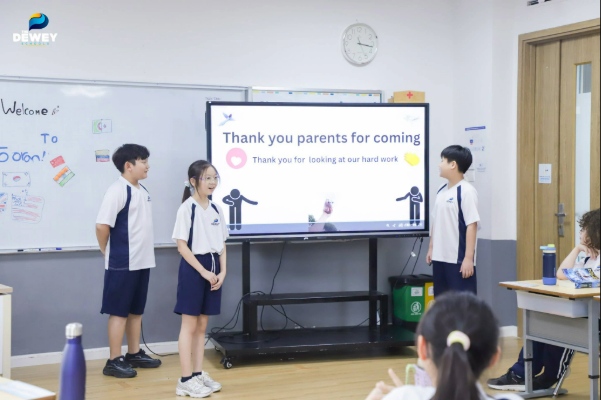
Open House gives parents a front-row view of how learning actually happens at Dewey — from the way a task is introduced, to how students work through it, apply what they know, and make their thinking visible.
Held during the week celebrating educator John Dewey’s birthday, Open House also brings one of his most familiar ideas into view: “Education is not preparation for life; education is life itself.”
And in these classrooms, that idea feels very real. Students are learning to solve problems together, use language to connect, explain what they know, and take ownership of their work.
Parents, meanwhile, get to see their children from a different angle — not simply as learners receiving information, but as young people with ideas, abilities, and voices of their own.