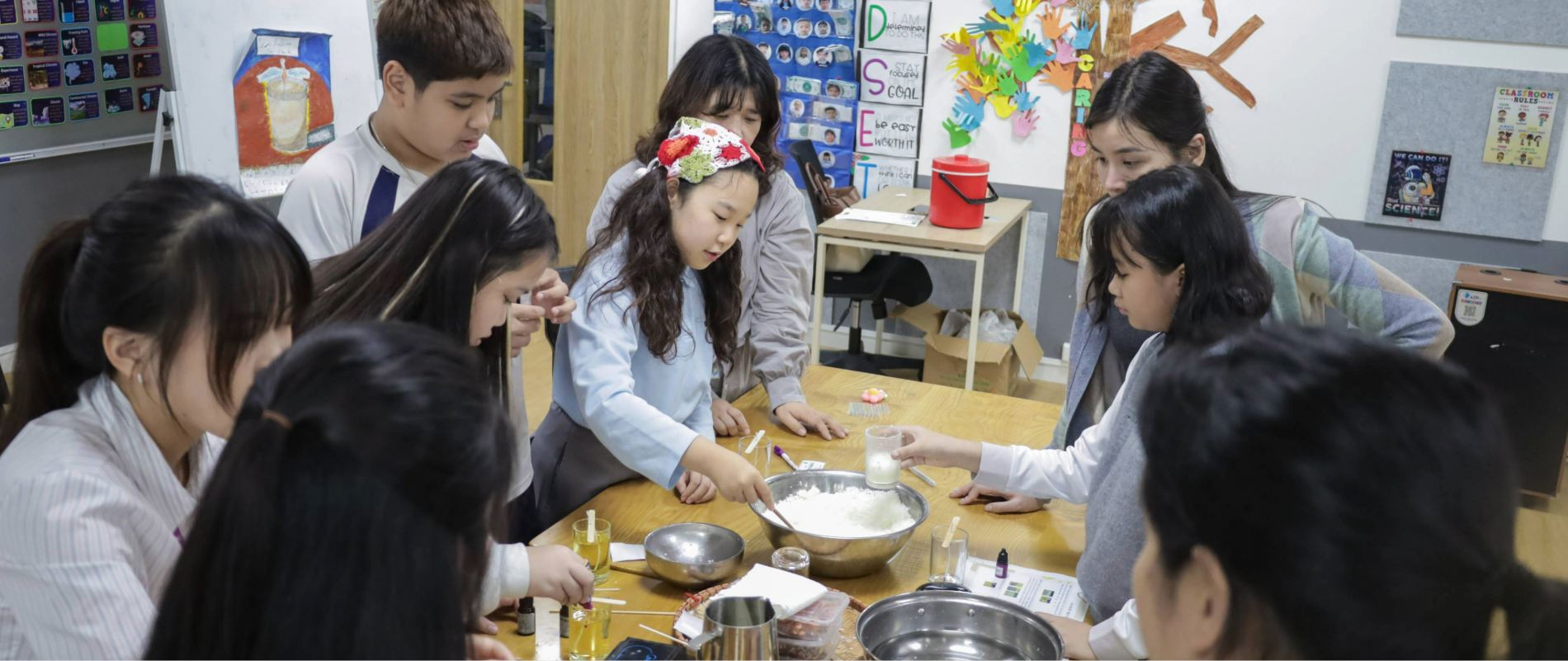

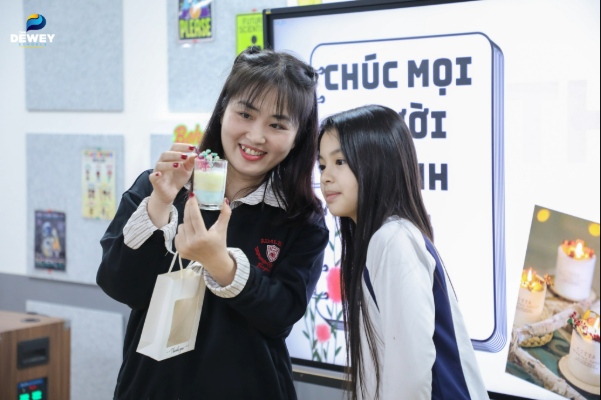
Last week, in the Science Lab D2.505, the “Fragrant Candle Workshop” of Grade 5 TDSers became busier than ever. From arranging soy wax and setting up the stove to preparing dried flowers, every step came together to create beautiful handmade scented candles for friends and family. This activity is part of the interdisciplinary Math–Science project titled “Small Flame – Far-reaching Fragrance.”
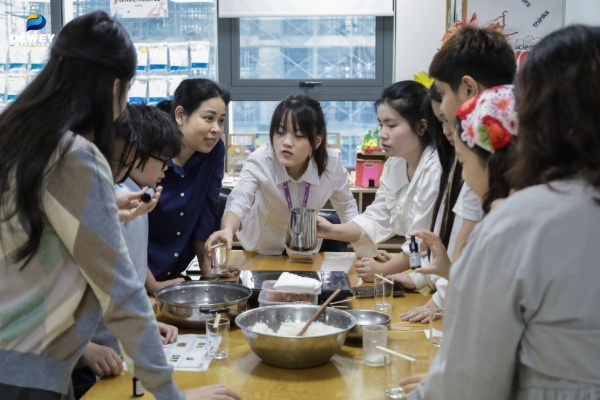
Mathematics plays a fundamental role throughout the entire project. Students calculate the appropriate mass and volume of wax based on the size of the container and determine the correct ratio of wax to essential oils to ensure the fragrance is balanced. They also estimate the expected burning time of the candles based on the amount of materials used. Concepts such as ratios, percentages, and spatial geometry become practical tools that help TDSers create harmonious and visually appealing candle products.
At the same time, scientific concepts related to matter and energy are integrated into each step of the candle-making process. Students directly observe the transformation of states of matter by melting solid soy wax using a double-boiling method until it becomes liquid, then adding essential oils before pouring the mixture into molds. Scientific discoveries become more vivid and meaningful when students connect knowledge with hands-on experience.
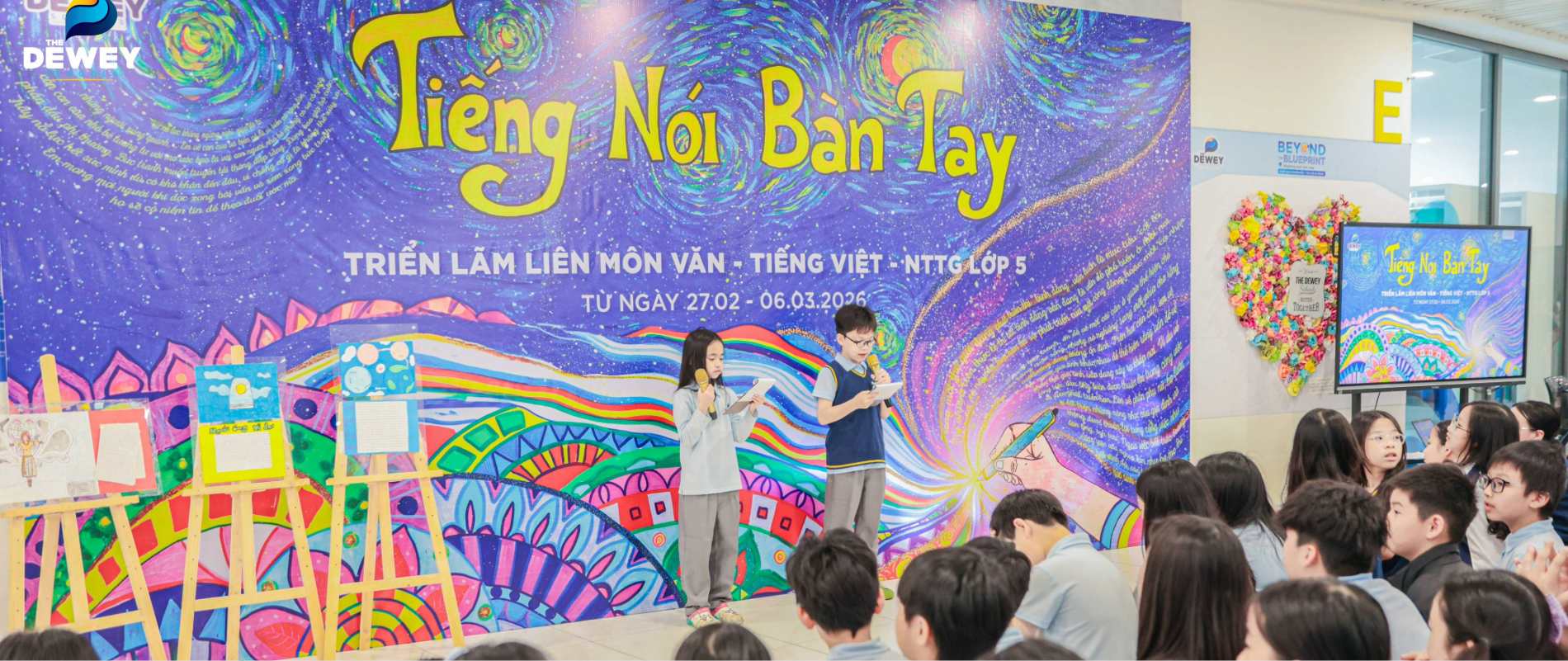
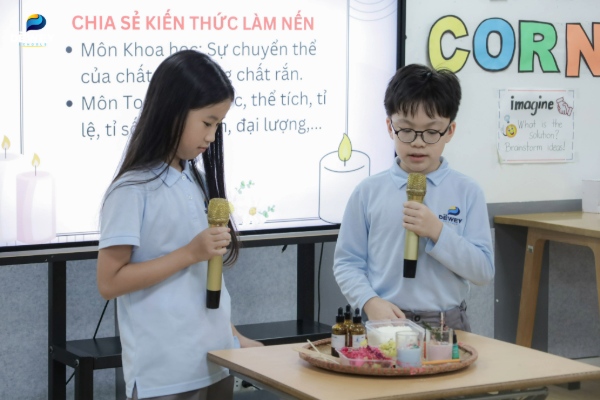
A highlight of the project is the opportunity for Grade 5 TDSers to become “young teachers,” sharing what they have learned with parents through experiential activities. By confidently presenting, explaining the process, and guiding others to participate, students not only deepen their understanding of Math and Science but also develop communication and presentation skills. After the project, Ms. Thanh Thu – mother of Minh Ngọc (5Luanda) – shared: “I am very proud to see the children confidently presenting in front of an audience and applying Math and Science knowledge through such creative activities. I hope in the future I will continue to hear their excitement as they share stories about their next projects.”
Project-based learning is a distinctive feature of the Dewey curriculum. From Primary School, TDSers are introduced to this learning approach through projects closely connected with real-life experiences. As a result, knowledge goes beyond classroom lessons and becomes practical competence, helping students understand concepts more deeply, apply them flexibly, and confidently step into future academic challenges as well as real-life situations.