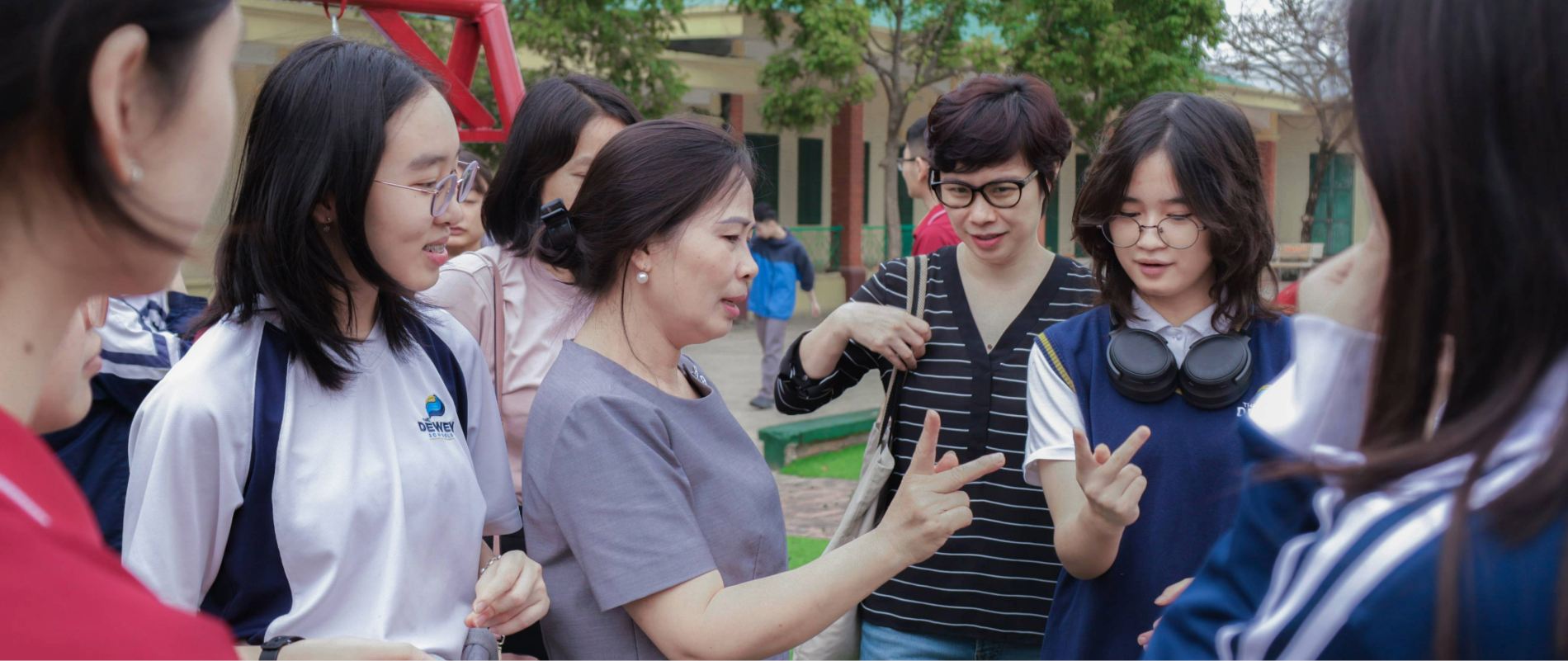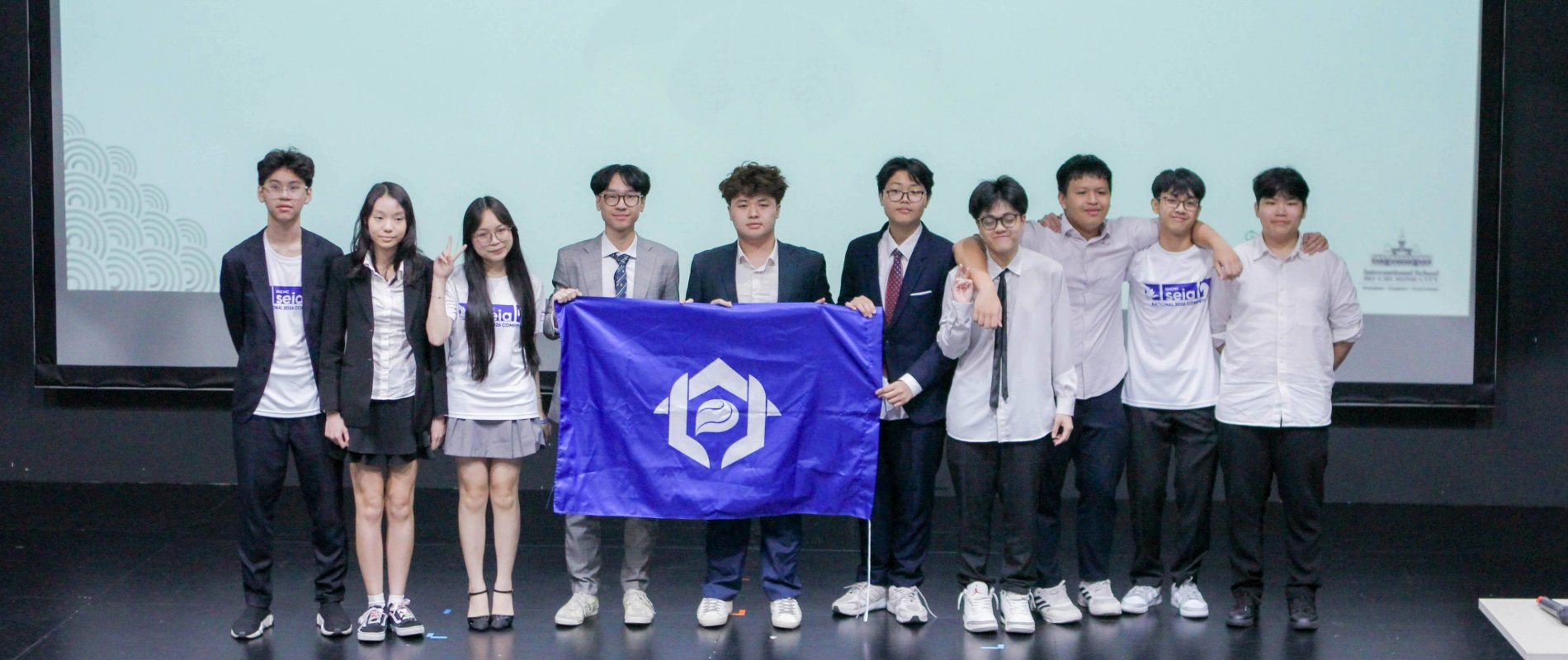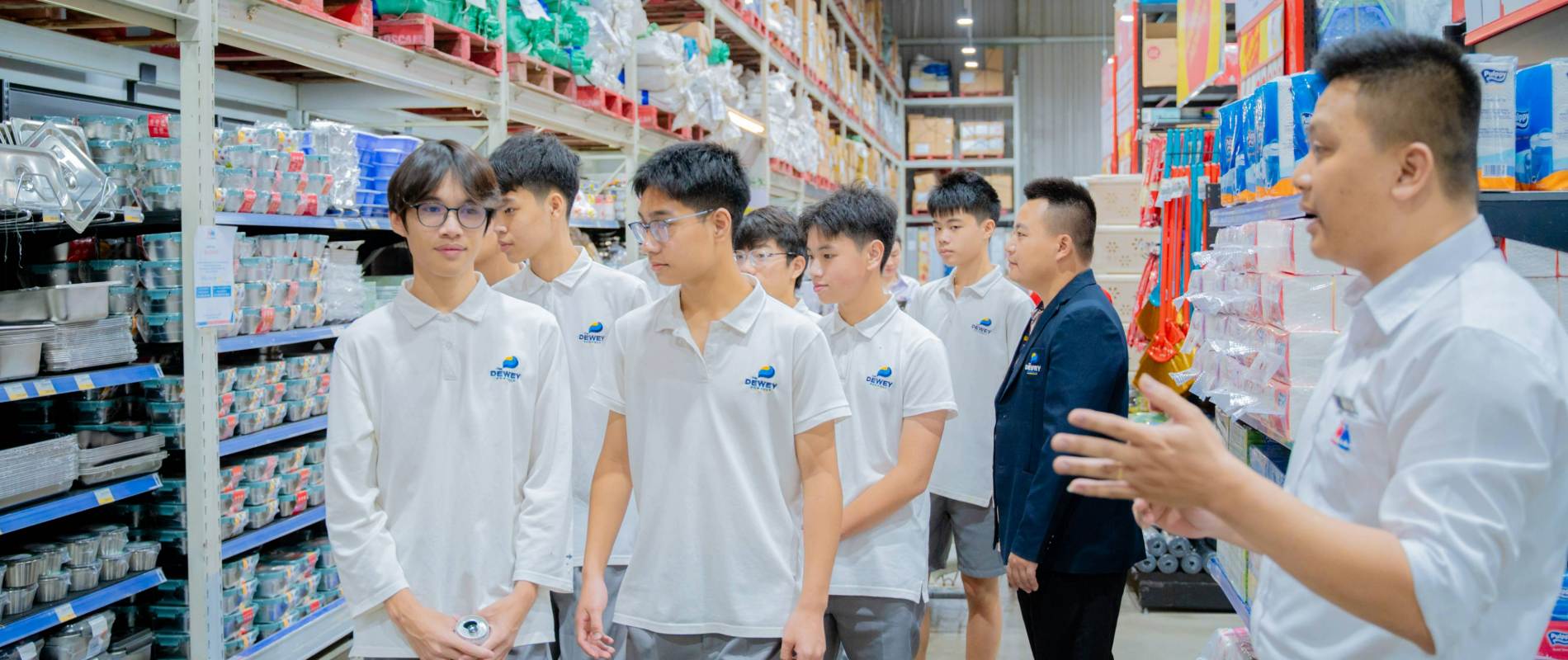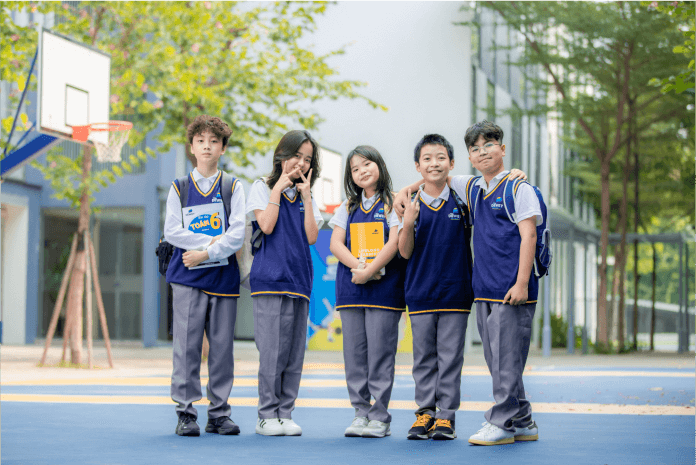

Awareness of online scams, students’ health and lifestyle, snacking habits… these are among the topics chosen by Dewey Hai Phong’s young researchers to analyze and present in their recent Grade 8 scientific research project. Beyond strong arguments and well-supported findings, students were also seeking an answer to a bigger question: “Why shouldn’t learning be limited to individual subjects?”
To explore this question, Grade 8 students embarked on a 19-week journey, flexibly integrating knowledge from Mathematics, Literature, and ICT to approach a structured scientific research process. They used the “sharp lens” of Literature to ask meaningful questions, select relevant topics, and build logical arguments. Mathematics became a tool to “uncover the truth” through numbers—from averages and percentages to visualized charts. Meanwhile, ICT served as the bridge that brought ideas to life, from designing online surveys to delivering professional and persuasive presentations.
When knowledge is confined within separate subjects, it becomes difficult for students to effectively solve complex problems. It is this “interdisciplinary flow” that transforms traditional learning into a seamless and highly applicable journey—one where students gradually develop self-learning abilities, synthesize knowledge, and flexibly apply insights from multiple fields to analyze, interpret, and solve problems.
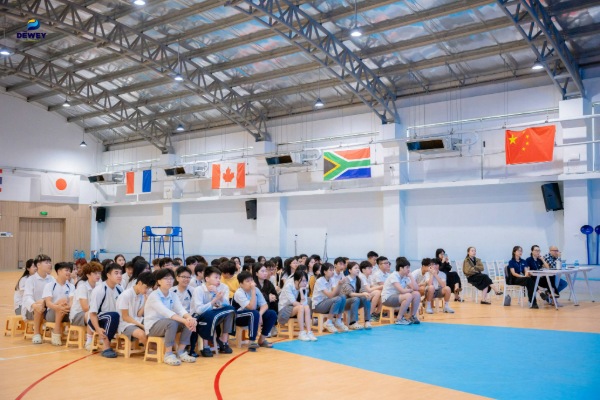
As a result, students not only complete a research report but also learn how to ask their own questions, independently collect and process data, and defend their viewpoints using logical reasoning and real-world evidence. A notable example comes from Class 8 Torun’s survey: “66.3% of students demonstrate good awareness of online scams, yet some still make incorrect choices.”
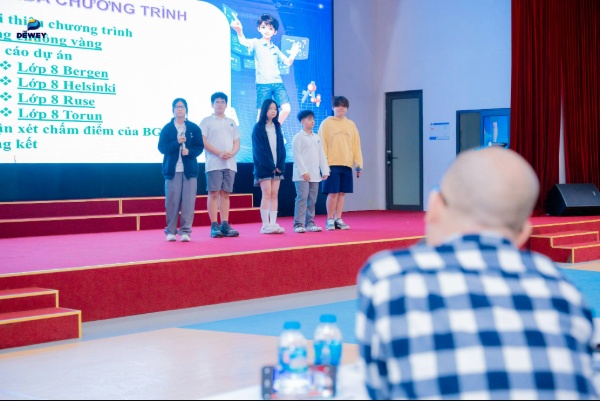
Concluding the project, the “academic arena” came alive with a Rung Chuông Vàng-style challenge, serving as a comprehensive review session. Questions spanning Mathematics, Literature, and ICT tested the young participants. After nearly an hour of intense thinking, four outstanding students successfully rang the bell of knowledge.
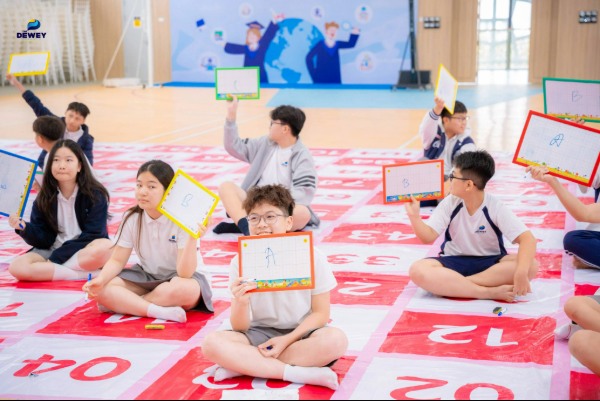
This scientific research project has sparked a genuine interest in science among students, while building a strong academic foundation through interdisciplinary learning, critical thinking, data analysis, and logical presentation skills. These competencies will empower them to thrive in diverse academic environments—whether in high school, university, or national and international competitions.