
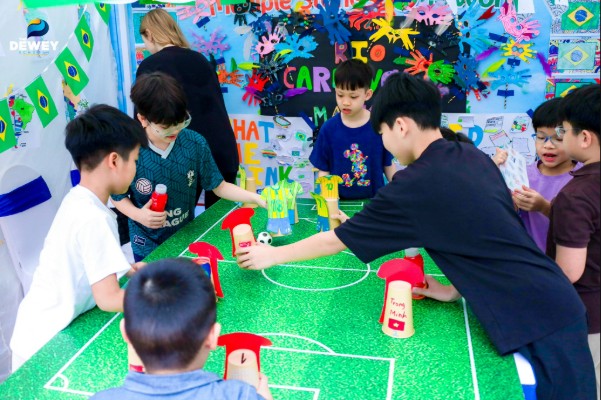
5 continents and 37 countries were vividly recreated through over 40 booths and experiential activities at Dewey International Day last weekend. Visitors were astonished by the elaborately invested models: the Galleon ships—a timeless symbol of the Spanish Empire—and the classical architecture of houses lining the poetic canals of Amsterdam. The Dewey campus was also ablaze with the colors of traditional international costumes: from the Mongolian Deel and Korean Hanbok to the graceful Vietnamese Ao Dai.
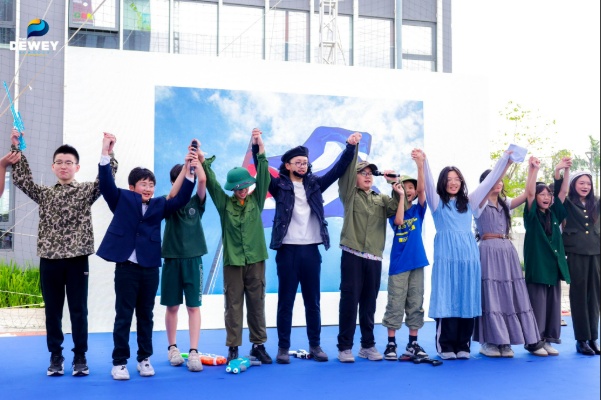
Under the theme “Multiple Stories, One World,” International Day 2026 was designed as a journey connecting diverse cultural values to create a community of rich identities. Each activity served as a bridge to close the distance, while every student acted as a cultural ambassador for nations around the world.
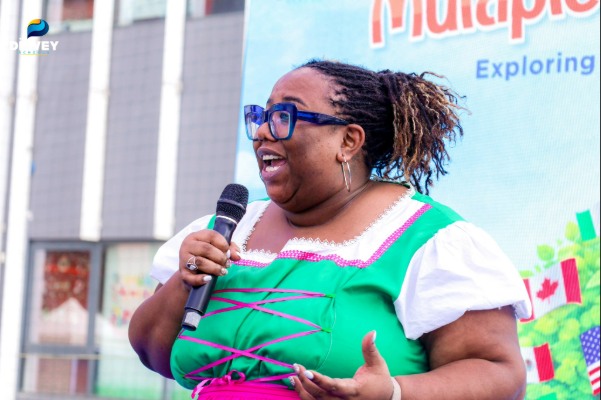
A highlight of the event was the confident and fluent English presentations by students as they introduced the roots and identities of various countries. These “young speakers” led the audience through the sophisticated world of French cuisine and the resilient land of revolutionary Cuba. They also called for action to support Tuvalu, an island nation facing rising sea levels, demonstrating the responsibility of global citizens toward the environment and the world.
Thien An (9Eger) shared: “We worked together to incorporate iconic Dutch symbols like windmills, tulip fields, and the legendary Amsterdam canals into our booth. Notably, we even hand – made traditional ‘poffertjes’ pancakes. This was a great opportunity for us to hone our teamwork skills and discover fascinating facts about the culture, cuisine, and customs of the Netherlands.”
Closing the journey of exploration, TDSers gathered at the “Dewey Global Tree” to capture memorable moments. Each card hung on the tree was a commitment from these future global citizens—to continuously improve themselves, nurture an open mindset, and contribute to building a more understanding and connected world every day.
International Day 2026 clearly reflects the educational environment that The Dewey Schools pursues: a learning space that respects differences and celebrates cultural diversity. Here, English is no longer just a subject; it becomes a natural language for communication, inquiry, and connection. When language is intertwined with experience and emotion, students gain the tools to expand their understanding of the world and its diverse value systems. Ultimately, integration does not start with distant journeys, but from an open environment where students learn to understand, respect, and connect with the world right from within their own school.