
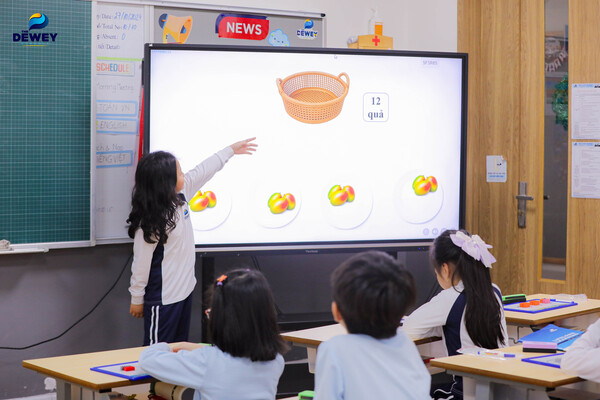
When a mother returns from the market and asks her child to divide 12 mangoes evenly onto four plates, how would the child do it?
Most parents would consider this problem simple: calculate 12 ÷ 4, and each plate gets three mangoes.
But have we noticed something? Children can only give that answer when they already know it. So if they don’t yet know the result, how do they actually handle the situation?
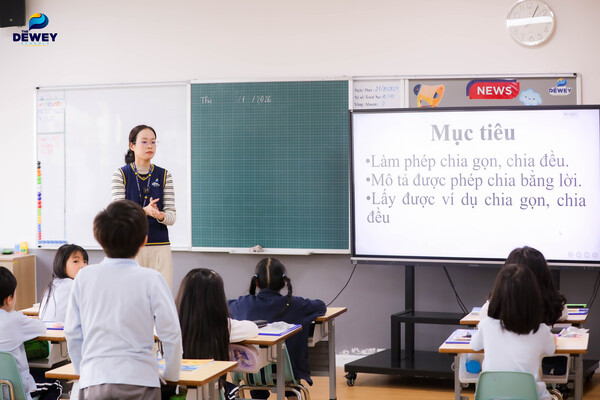
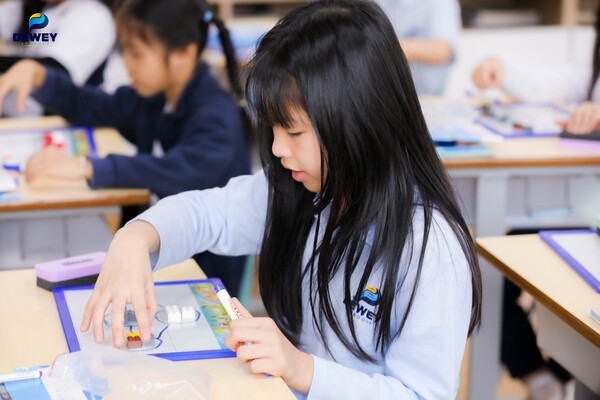
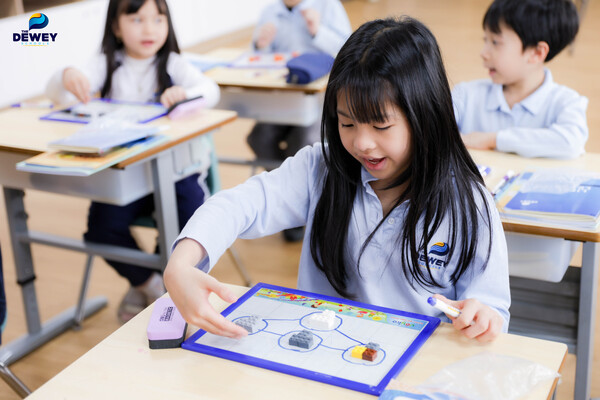
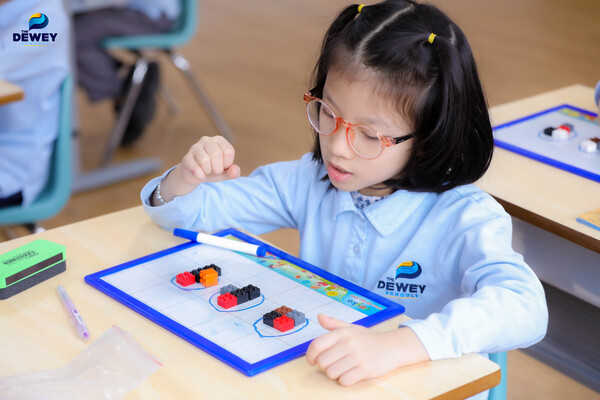
In a Grade 2 Mathematics lesson at The Dewey Schools, students are guided to retrace the journey of scientists in discovering division. Starting with the same task—sharing 12 mangoes equally among four plates—students begin by working with their hands. The 12 mangoes are represented by 12 blocks, and the four plates by four circles drawn on the whiteboard. First, the student picks up four blocks and places one block into each circle. The process is repeated a second time, then a third. When there are no blocks left on the table, the student concludes that each circle contains three blocks. In this way, the student learns the operation and concept of equal sharing and independently arrives at the result 12 ÷ 4 = 3, instead of being answered something taken for granted.
More importantly, understanding the operation and concept of equal division enables students to handle similar real-life situations, regardless of whether they already know the numerical result. Imagine that the next day, the mother asks the child to divide 15 flowers evenly into five vases. Even if the child has not yet learned the calculation 15 ÷ 5, can they still do it? The answer is yes—because they already understand the process of division.
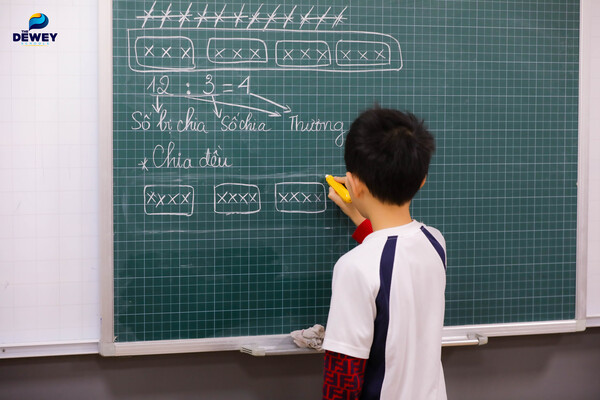
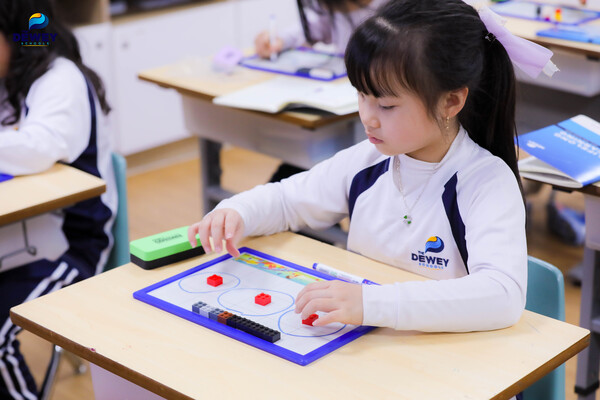
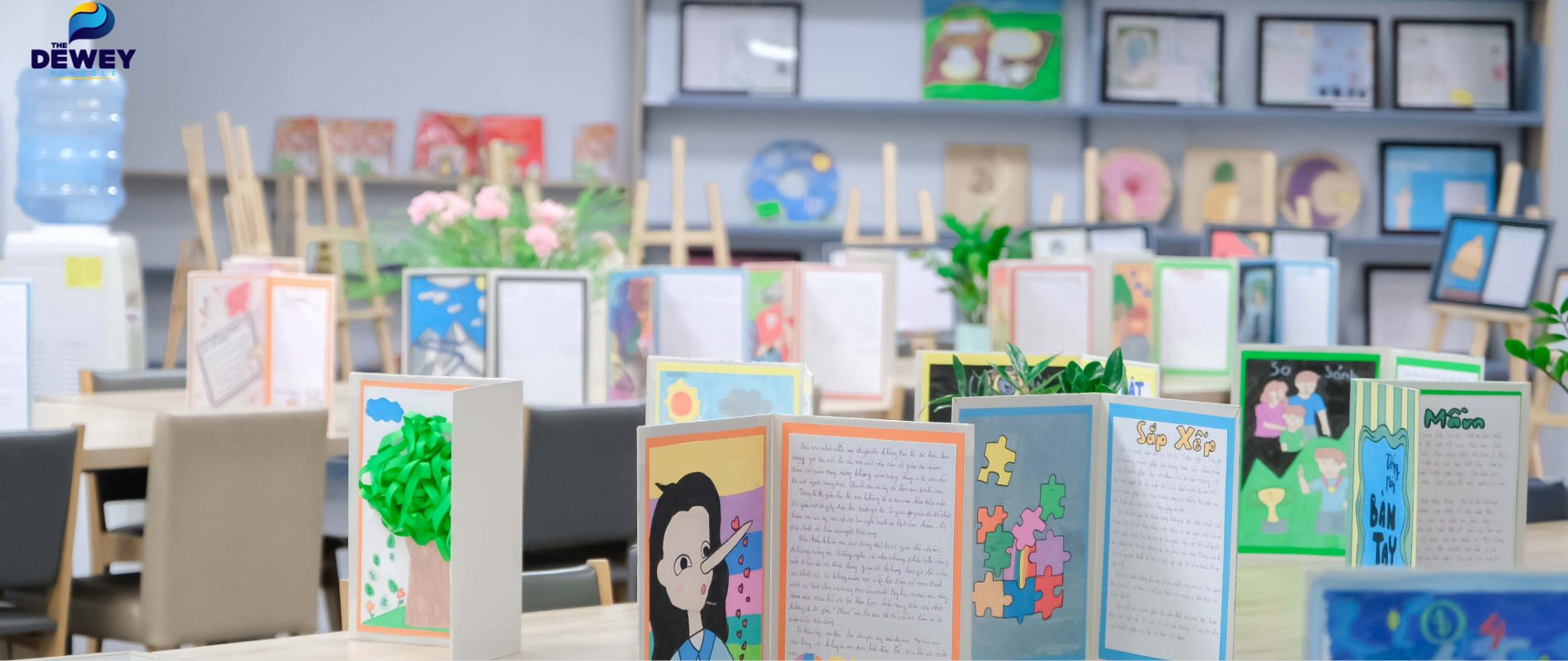
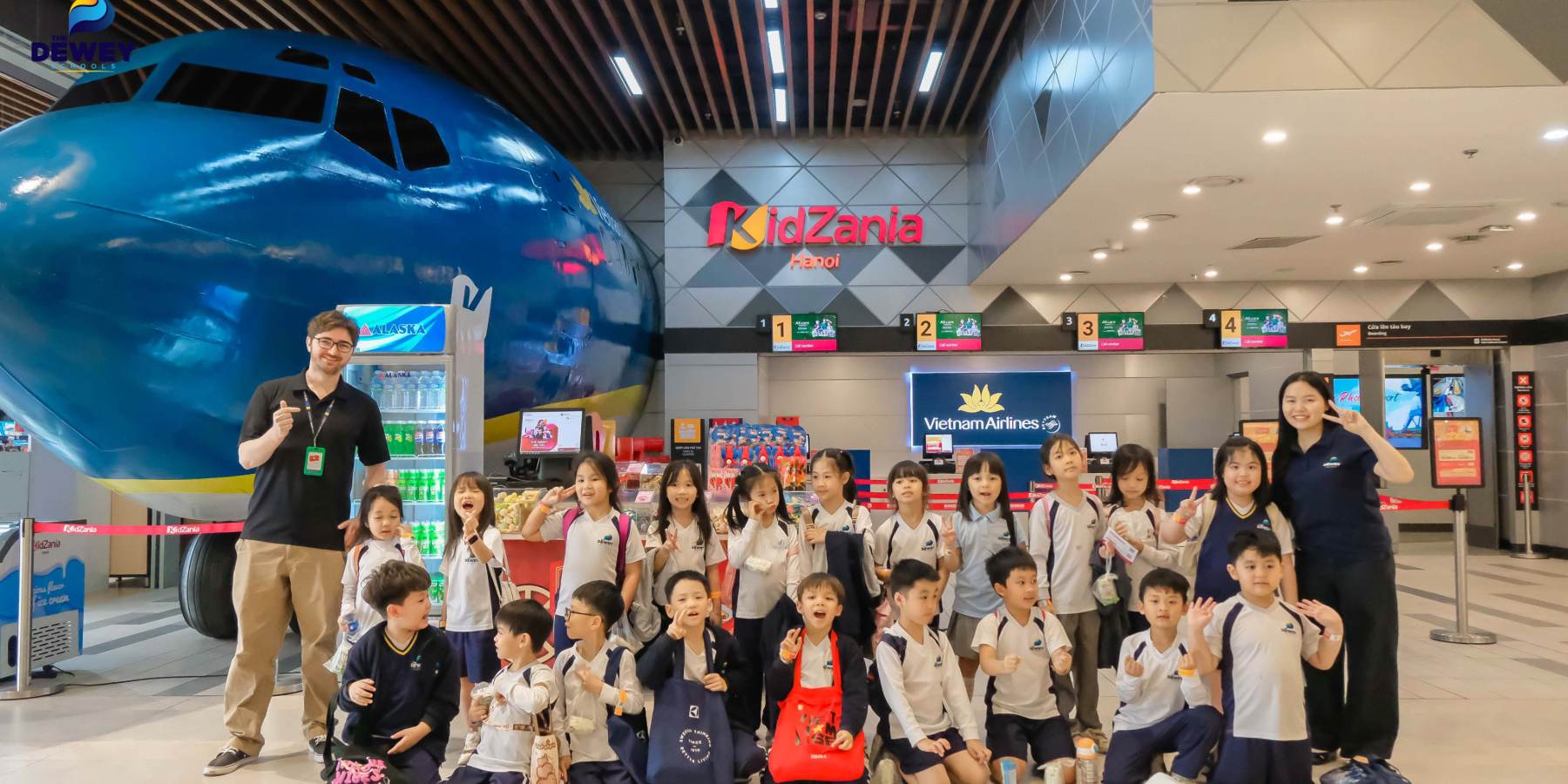
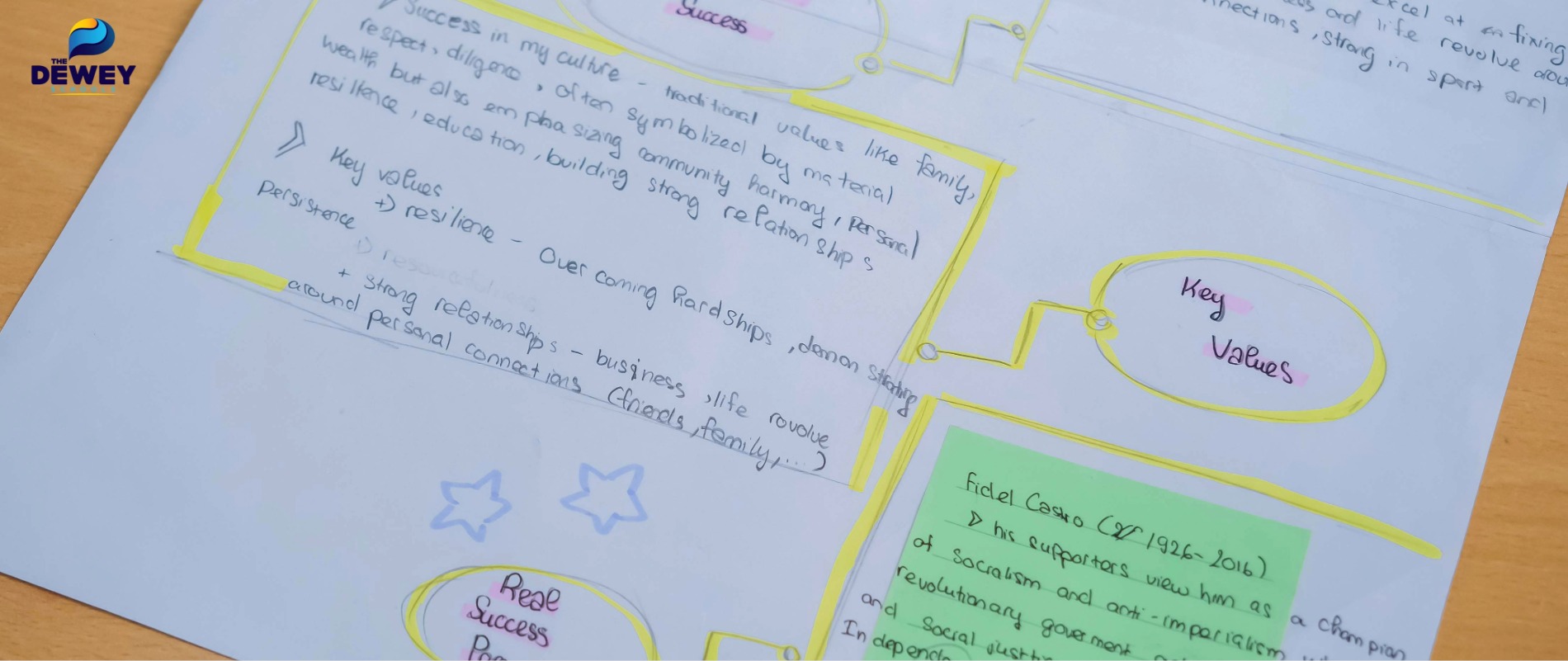
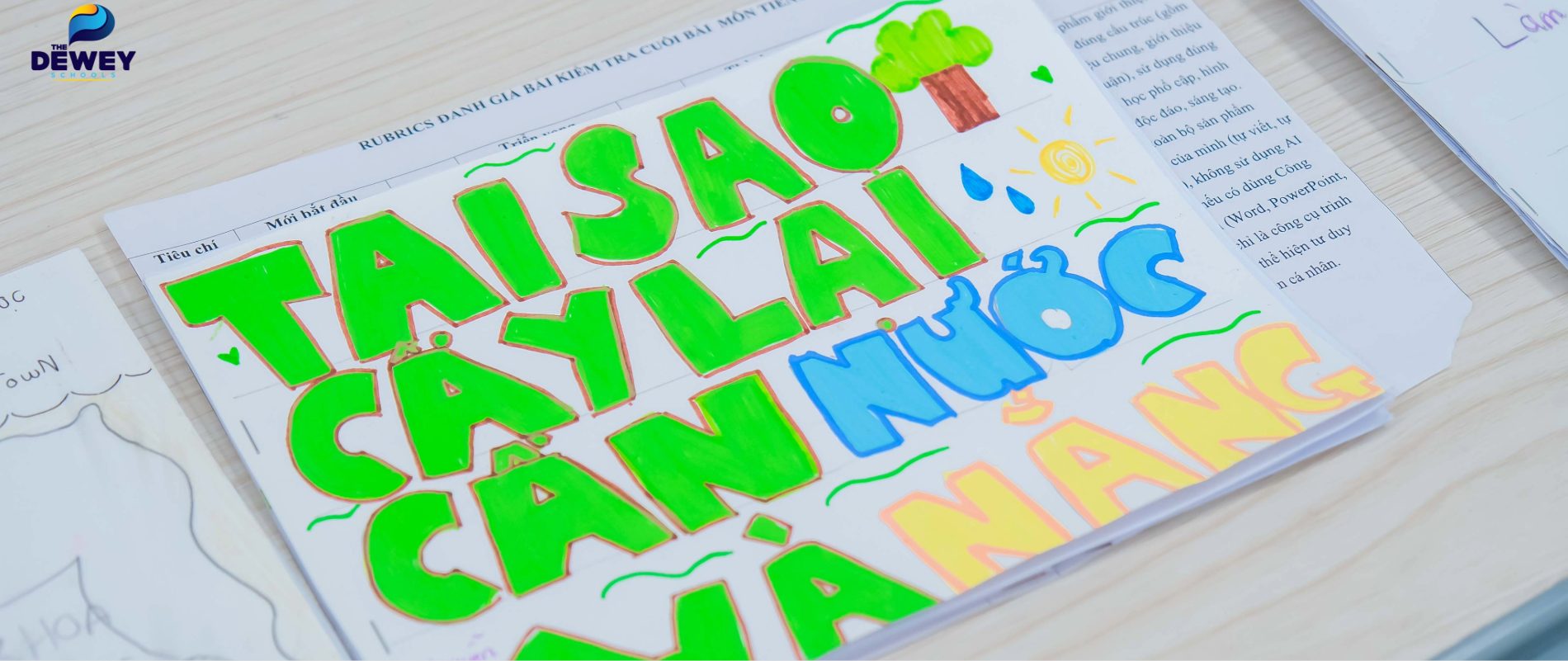
This is the key distinction of experiential education at The Dewey Schools. Students are placed at the center of learning, and learning itself is a journey of experience through which knowledge is discovered. Most importantly, knowledge is connected to real life, equipping students with practical competence to solve problems. As a result, Mathematics lessons at Dewey are filled with excitement and a spirit of exploration, rather than the anxiety and fear of Mathematics that many students experience elsewhere.
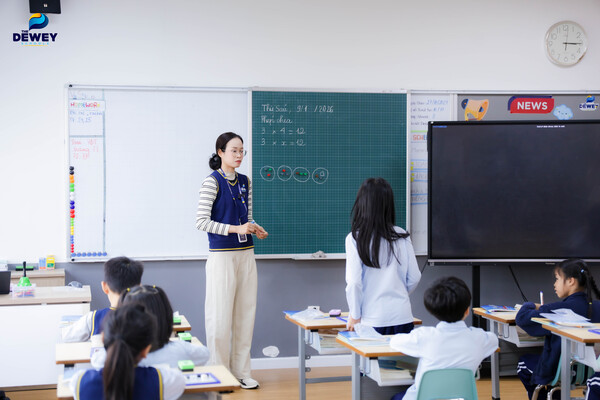
Forming concepts through hands-on experience and truly understanding their essence also provides a solid foundation for the development of thinking skills and independent learning in the future. For example, instead of merely seeing the number 10 written on the board, students physically arrange 10 counting sticks and bundle them into one group, thereby understanding that 10 units make one ten. When representing this visually, they recognize the rules of numerical notation, the organization of natural numbers in the base-10 system, and how these ideas can be extended to other number systems. A strong grasp of mathematical foundations at the primary level is precisely what enables students to pursue deeper study at higher levels later on.
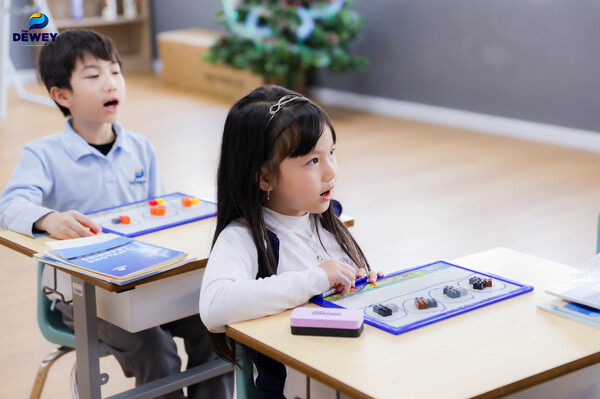
The ultimate goal of Mathematics is not simply to find the correct answer or to turn students into “problem-solving machines,” but to develop thinking and practical competence. As Ms. Lô Thúy Hương, Head of Primary Mathematics and a member of the Dewey Scientific & Pedagogical Council, affirms: “A house is not built on the experience of a master craftsman, but on the blueprint of an architect. Without concepts, like a craftsman relying only on experience, the product may be right or wrong. But when working from the essence of concepts, the result is certainly correct. At that point, students gain confidence—the foundational quality of an independent individual. A mind equipped with a solid system of scientific concepts is the foundation upon which we can build a house that reaches toward the sky.”
————–
The “EXPERIENTIAL CYCLE” campaign by The Dewey Schools affirms an educational approach in which experience is not merely a means, but the core of learning itself.
Here, every student is placed at the center of their developmental journey — guided to build self-directed learning capacity, independent thinking, and the confidence to take ownership of their own future.
Step into the dynamic world of experiential education here: https://tuyensinh.thedeweyschools.edu.vn/the-experiential