
The impact of gaming on physical and mental health.
Online boycotting on social media.
Effective marketing strategies targeting Gen Z.
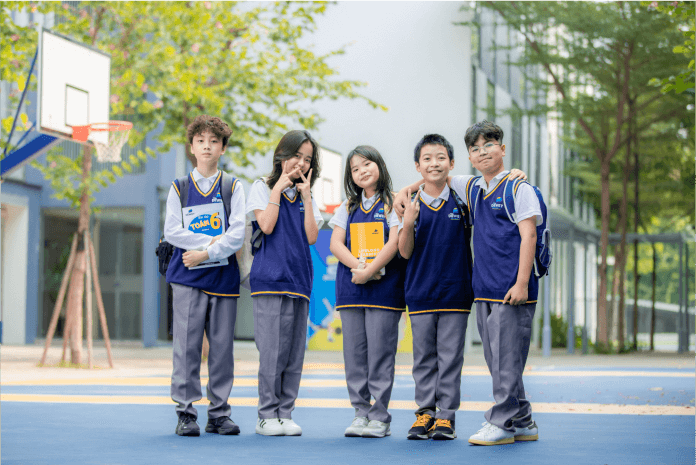
These are among the contemporary topics selected and developed by Grade 8 TDSers in the “Future Researchers” project.
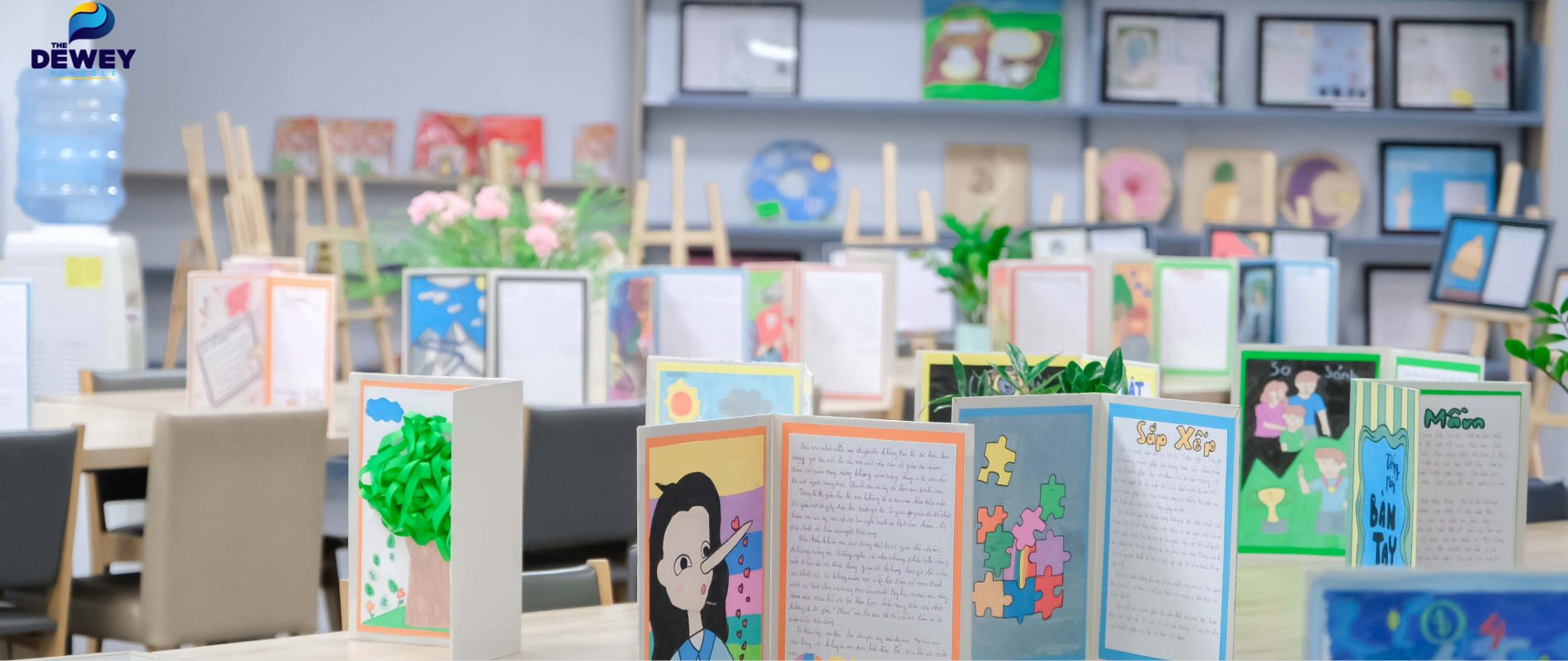
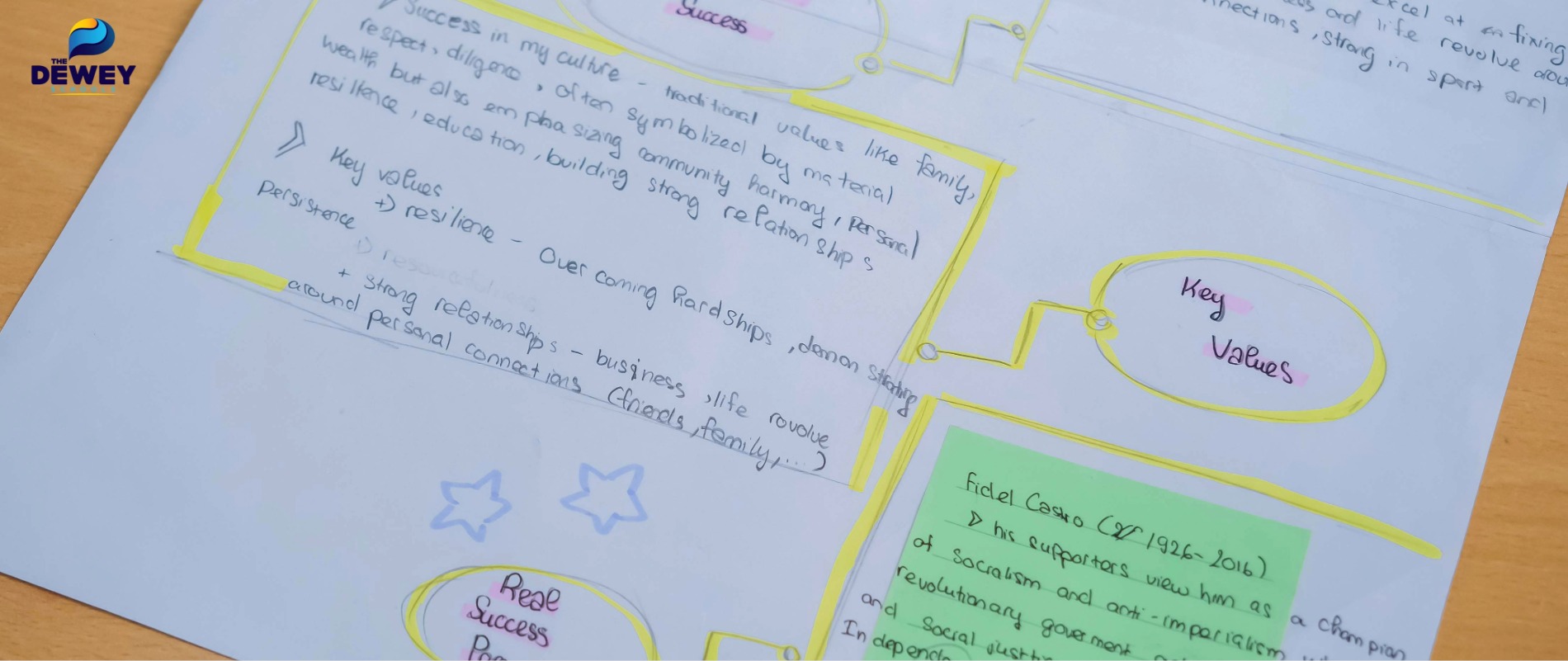
In this project, TDSers step into the role of “first-year university students,” experiencing an authentic research process over 19 weeks: generating ideas, formulating research questions, designing surveys, collecting and analyzing data, and presenting their findings.
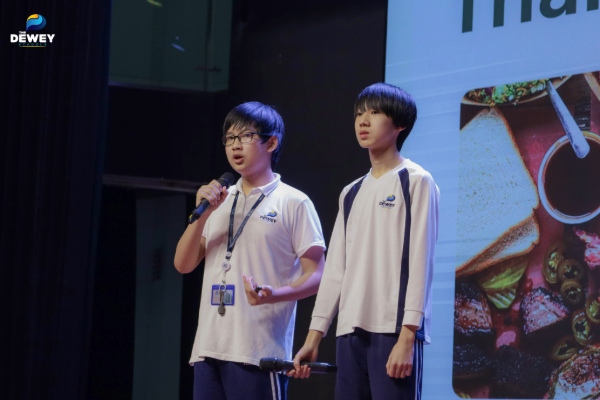
A key highlight of the project is its interdisciplinary integration of Literature, Mathematics, and ICT, creating a cohesive and highly practical learning journey.
Mathematics is applied as a scientific tool for data analysis. Students use statistics to calculate percentages and mean values, compare data sets, and visualize findings through charts to strengthen their research arguments.
Informatics plays the role of “bringing ideas to life” — from designing online surveys and analyzing data to presenting research reports in a professional, clear, and persuasive manner.
Literature supports students in developing academic language skills: constructing coherent research questions, organizing logical arguments, and using precise scientific language effectively.
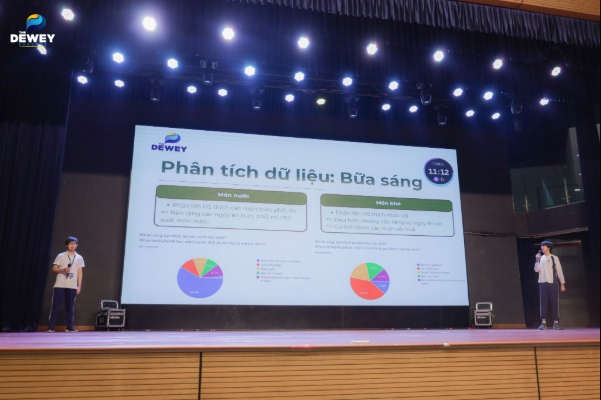
Through this project, students gradually build essential competencies such as inquiry skills, logical thinking, data verification, persuasive communication, and defending their viewpoints. “Early exposure to research projects and hands-on implementation helps students develop the necessary thinking foundations, become more confident as they move to higher levels of education, and open up broader opportunities to explore pathways that best suit their future,” emphasized Mr. Chien Thang, Career and University Guidance Specialist.
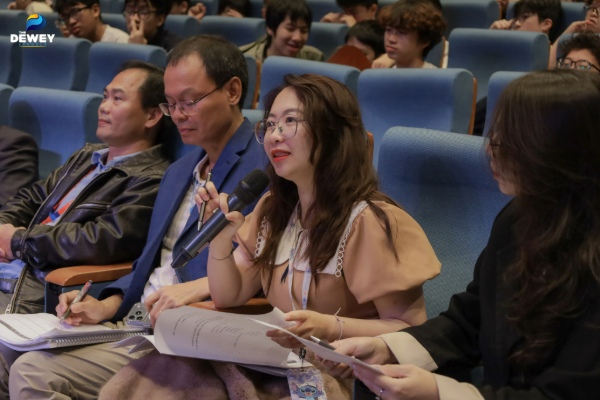
After watching the presentations of Dewey’s “young researchers,” Mr. Khac Tien, parent of a student from class 8Kemi, shared: “What impressed me most is that although they are only in Grade 8, the students were able to approach and complete research projects in a serious and structured manner — even beyond parents’ expectations. Listening to my child enthusiastically share meaningful experiences at school each day reassures me that we made the right choice in selecting this learning environment.”
The “Future Researchers” project equips students with a strong academic foundation: critical thinking, data analysis skills, clear argumentation, and process-oriented working methods. It also offers early exposure to university-style learning — deep learning, structured learning, and proactive knowledge-building — empowering students to confidently take ownership of their future.