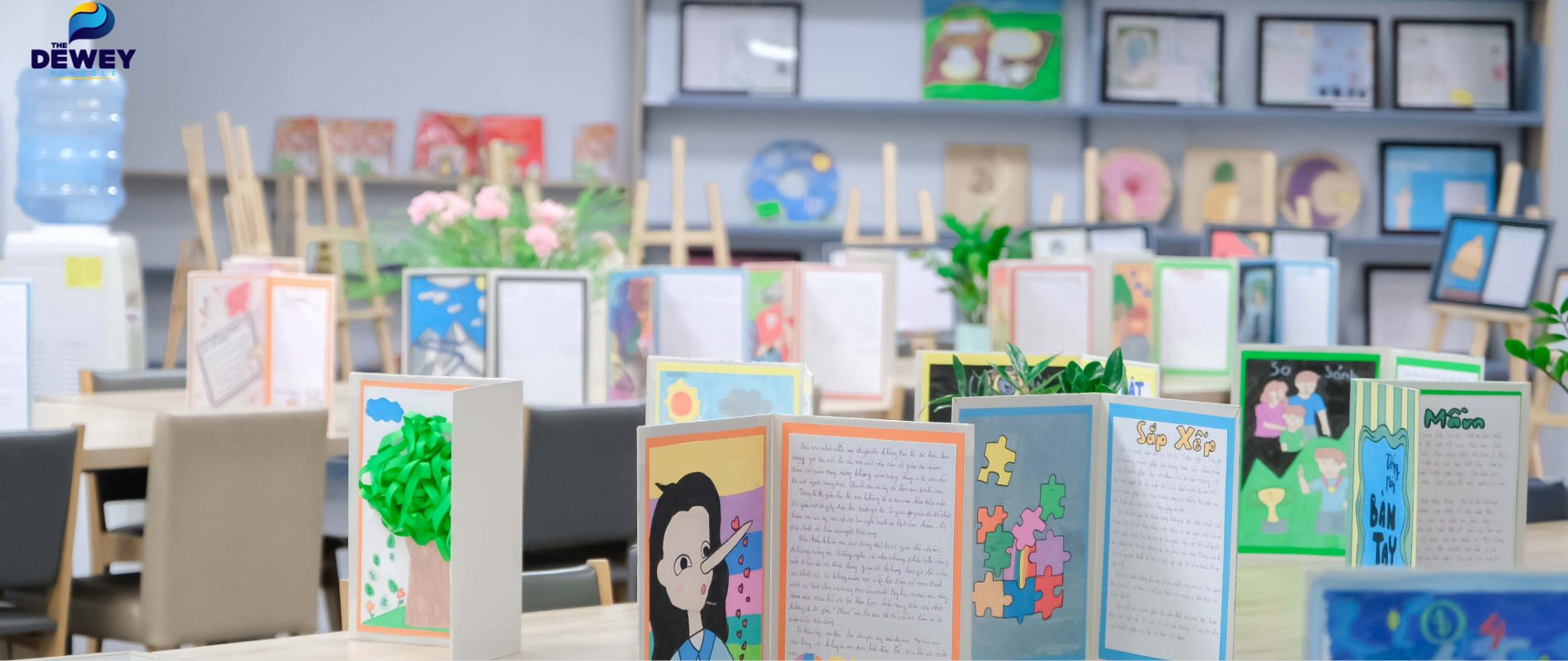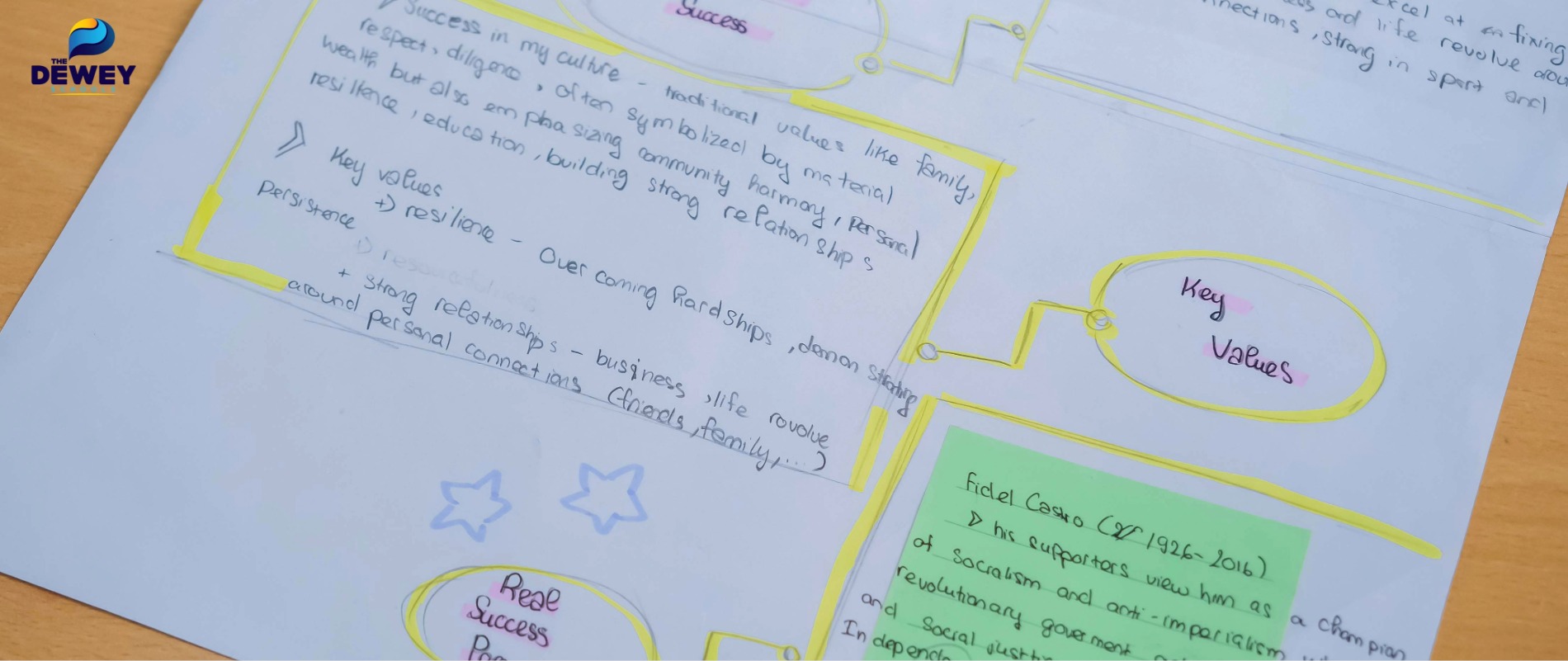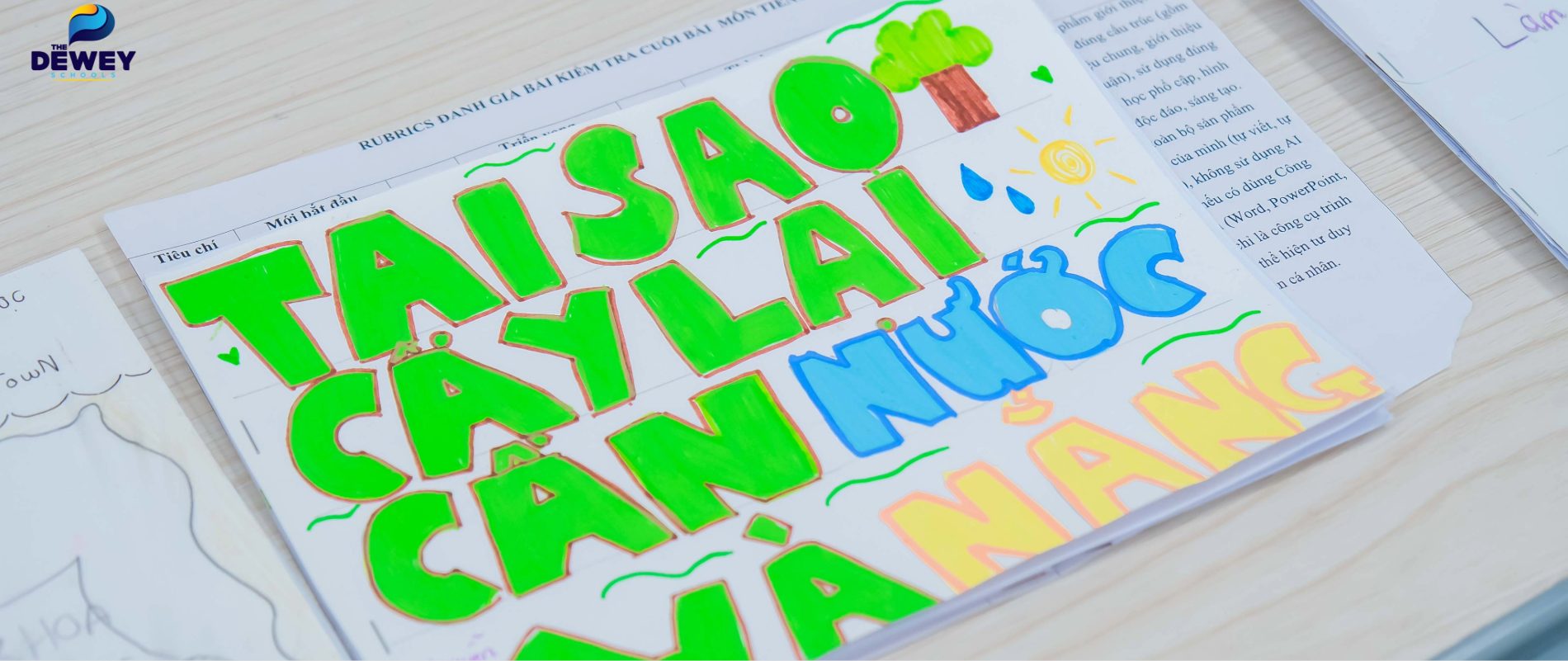

Have you ever wondered: If children spend so much time experiencing, when do they actually study?
In reality, experience does not take time away from learning. Experience is how learning happens.
Grounded in the foundational philosophy of John Dewey—the philosopher and educational reformer who laid the cornerstone of experiential education—Dewey invites parents to explore four common misconceptions and discover the correct understanding below.

Misconception: Experiential education is merely extracurricular activities or field trips
Reality: According to John Dewey, experiential education is not a series of disconnected activities. It is a structured learning process operating through a cycle of experience – reflection – inquiry. Knowledge is formed when learners actively engage in meaningful learning situations—observing, experimenting, reflecting, and applying what they learn to real-life contexts.

Misconception: Learning through experience diminishes academic rigor
Reality: In Dewey’s philosophy, experiential learning does not weaken academic rigor; on the contrary, it deepens academic understanding and connects it meaningfully to real life. Rather than passively absorbing information from textbooks, through approaches such as project-based learning and inquiry-based learning, students transform knowledge into tools for thinking and action, engaging directly with and solving real-world problems.

Misconception: Experiential education reduces the professional role of teachers
Reality: Student-centered learning is a core principle of experiential education. Teachers are no longer mere transmitters of knowledge but designers of learning environments and architects of meaningful experiences. Students do not simply follow instructions; they are empowered to voice their perspectives, interests, and aspirations, and to make choices about learning content and activities that suit them.

Misconception: Experiential education is only about life skills and is unrelated to academic subjects
Reality: John Dewey famously stated, “Education is not preparation for life; education is life itself.” In this spirit, academic subjects are inseparable from real life. Experiential education not only nurtures knowledgeable learners but also equips them with the capacity to act, enabling students to address meaningful challenges in their lives and communities.

So, how is experiential education brought to life in every lesson, every subject, and at every grade level?
Parents are invited to look forward to the answer in Dewey’s special Experiential Education campaign, launching on December 19th!