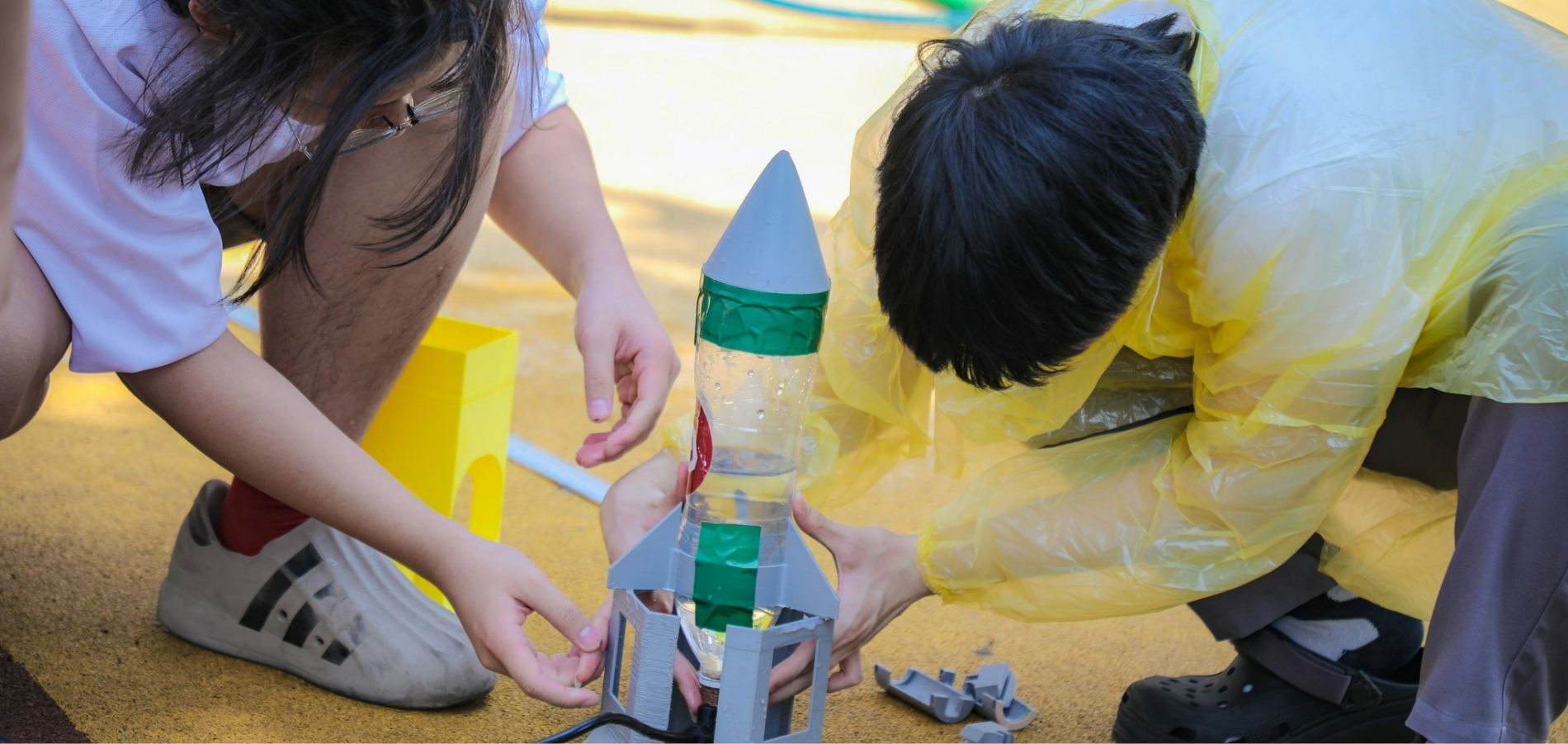

Last week, the Dewey football field became lively with the sight of TDSers busily preparing for a water rocket–building activity: one group collected recycled plastic bottles, another checked bicycle pumps, and others assembled different parts of the rockets. This was the highlight activity of the final science lesson for the Forces unit for Grade 11 Sedona students. By combining theory with hands-on practice, TDSers transformed physics formulas from the page into water rockets soaring into the sky, making scientific knowledge more vivid and tangible than ever before.
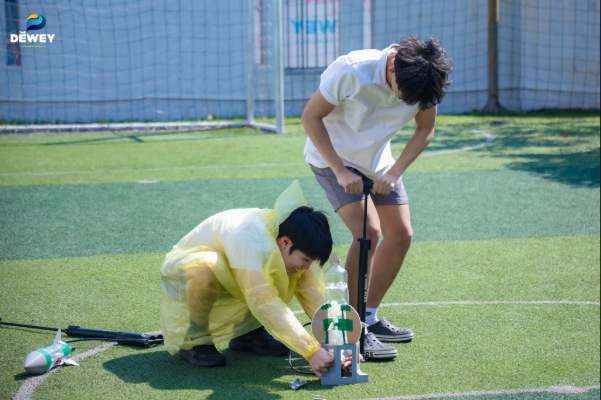
During the process of designing and testing their water rockets, students had the opportunity to apply their understanding of dynamics and motion in real-life situations. The rockets were made from recycled plastic bottles and powered by water and compressed air pumped in using a bicycle pump to create pressure. When launched, water is forced downward due to the high pressure inside the bottle, producing a reaction force that propels the rocket upward according to Newton’s Third Law of Motion. At the same time, students observed that changing the rocket’s mass and structure directly affects its acceleration, based on Newton’s Second Law of Motion.
From there, each group calculated and adjusted factors such as the amount of water, the level of compressed air pressure, and the overall weight of the rocket to create the appropriate acceleration and help the rocket reach the desired height during launch.
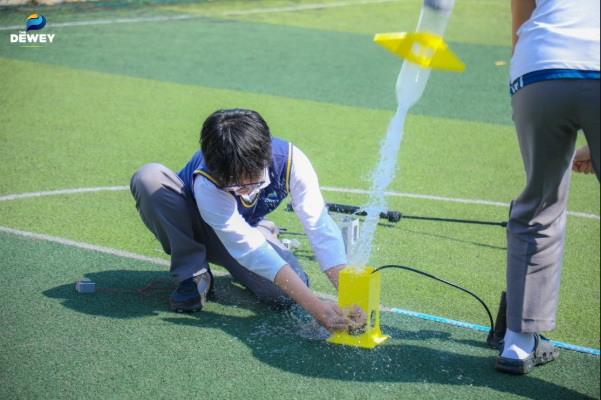
These principles and laws then became the foundation for students to design and build their own rockets. From choosing the number of fins and the shape of the nose cone to determining the amount of water used, each group experimented with and refined multiple variables to find the optimal design—allowing the rocket to achieve maximum height while maintaining a stable, vertical flight path.
Gia Bảo (11 Sedona) shared: “I found this activity really interesting. From basic elements like water and air, and simple tools such as a bicycle pump, we figured out how to combine them using the physics knowledge we learned to make a rocket fly. The two weeks of working on this project went by very quickly. For me, it felt more like a journey of scientific discovery rather than just sitting in class and studying.”
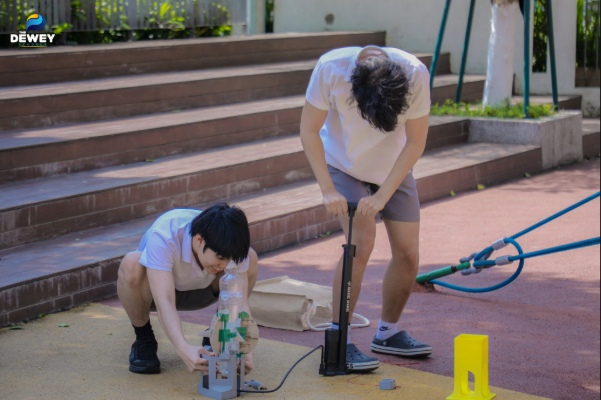
More than just a science lesson, the project provided TDSers with the opportunity to think like real engineers: experimenting, observing, analyzing data, and improving their designs. These hands-on experiences motivate students to better understand complex scientific principles and laws, turning science into an “ally” that accompanies them throughout their learning journey.