
Each student has a different pace and way of absorbing knowledge. So, how can a lesson avoid moving too fast for one student while not becoming too easy for another? That is why differentiated instruction has become a crucial competency for teachers at The Dewey Schools in their journey of implementing experiential education, and it is also a key content in the professional training activities currently taking place system-wide.
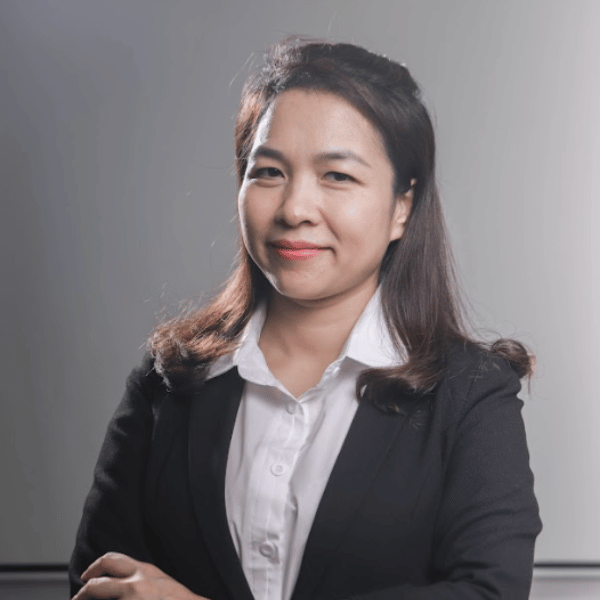
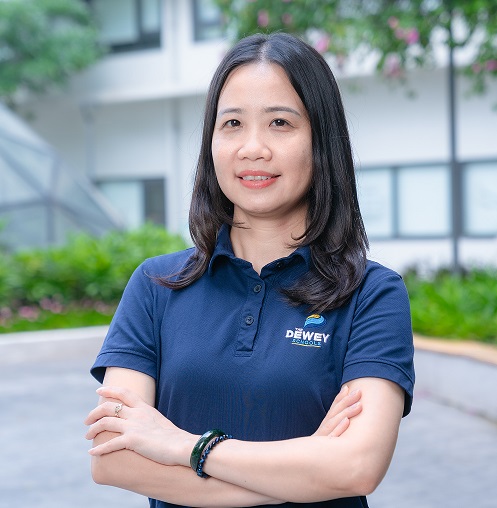
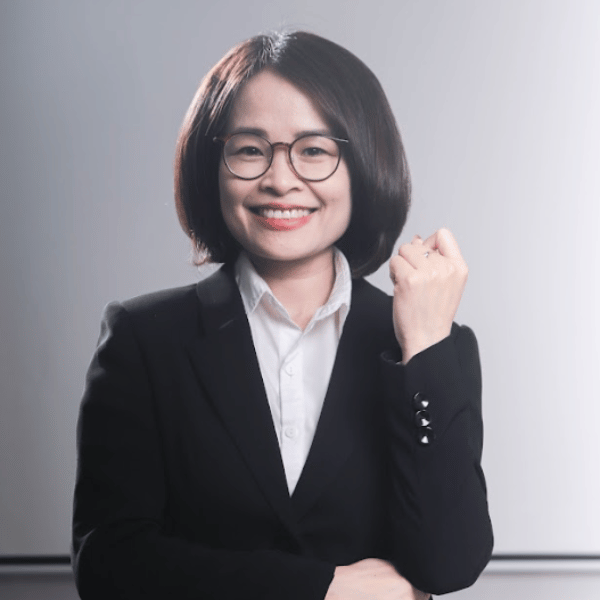
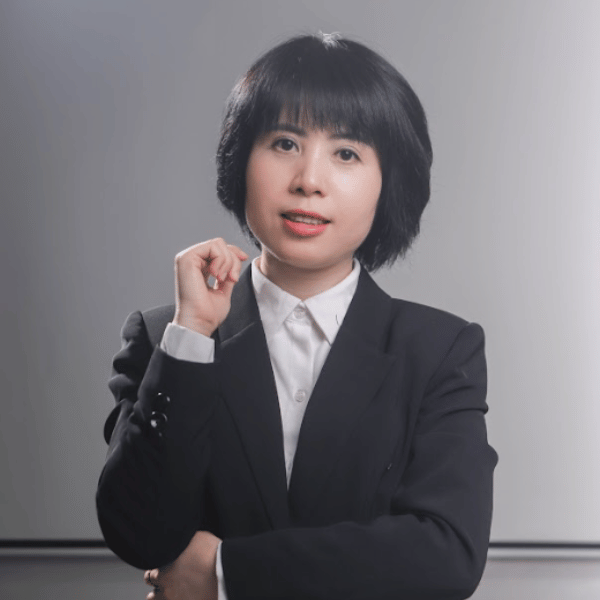
“Differentiated instruction does not mean lowering requirements for a group of students or creating multiple different curricula within the same classroom. What is important is that teachers identify the starting point of each student to choose appropriate activity organization, levels of support, and challenges, helping each individual maximize their own potential,” shared Ms. Nguyen Thi Thuy – ERPC Elementary Math Specialist (Education Research and Pedagogical Council).
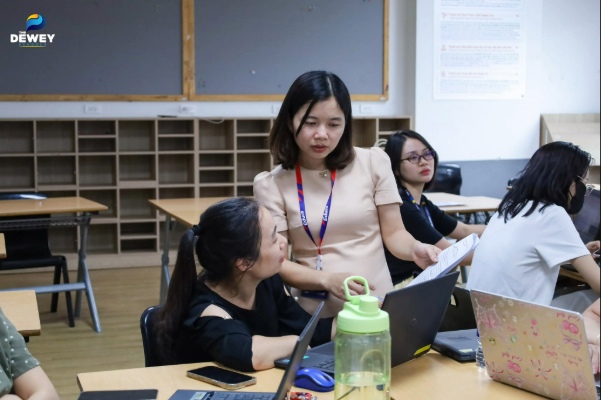
Based on that principle, teachers are guided to design learning objectives across multiple cognitive levels. Within the same lesson, some students need to reinforce foundational knowledge, while others are ready to analyze, connect information, or solve more complex problems. Instead of everyone performing the same task, teachers proactively design multiple approaches so that each student can learn at their current capacity and have the opportunity to take a step forward.
This requires teachers not only to be professionally competent but also to continuously observe, ask questions, listen to feedback, and adjust activities right during the teaching process. A high-quality lesson, therefore, is not only meticulously prepared before class but also flexible enough to adapt to the actual learning needs of each student.
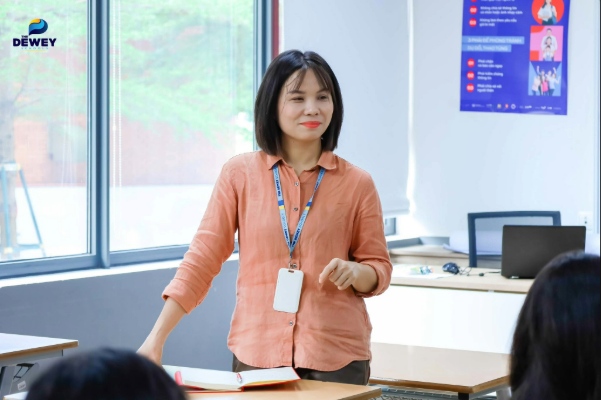
Throughout the training series, the teaching staff analyzed lesson plans, discussed real-world teaching scenarios, shared experiences, and benchmarked against the international accreditation standards of the Council of International Schools (CIS).
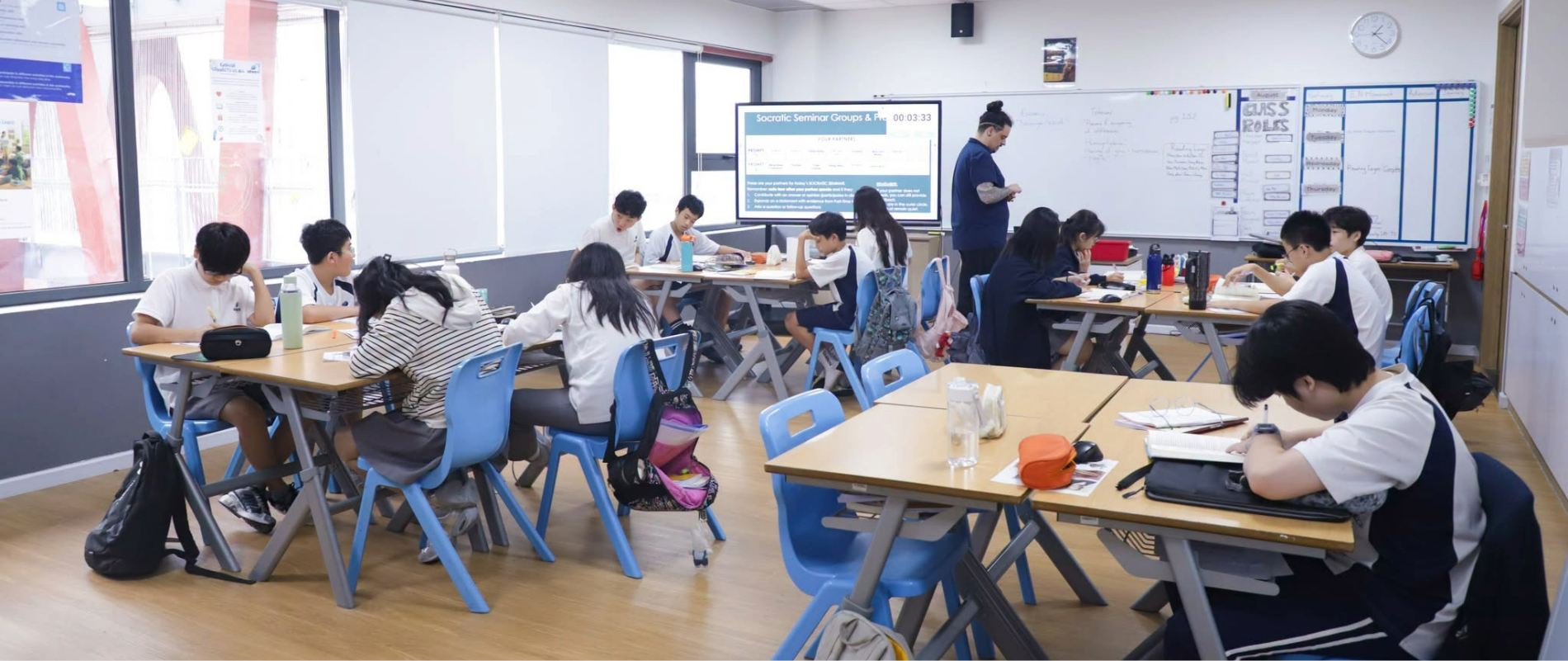
In particular, new teachers were also trained on how to organize learning groups in actual classroom settings. Students are not “labeled” based on a fixed ability but are rotated flexibly: sometimes working with peers who share the same interests to leverage their strengths, and other times collaborating with those who have different ways of thinking to learn how to listen, critique, and broaden their perspectives. When necessary, teachers can also organize short-term support groups to help students consolidate their foundation before returning to the general learning pace.
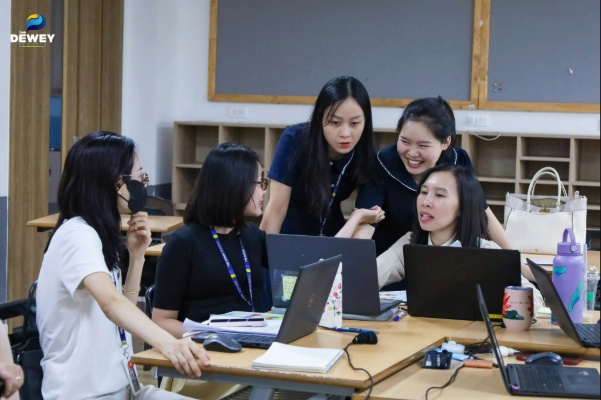
Each new school year brings new goals. And behind the well-prepared lessons are many hours of learning by the teachers themselves throughout the summer. Because Dewey believes that when teachers constantly learn and innovate their teaching methods, students will learn in a consistent, high-quality, and continuously improving educational environment. On that foundation, each student develops according to their own capacity and personal pace, is encouraged to discover their own strengths, and step by step becomes the best version of themselves.