
IB or AP – which is the optimal choice if your child plans to study in the U.S.?
What distinguishes the IB programme at Dewey from other international IB schools?
What competitive advantages do IB students gain when applying to top universities?
To provide parents with a comprehensive and clearer perspective, the seminar “The IB Pathway – From Scholarships to Global Success” at Dewey addressed these concerns while offering strategic guidance for students’ academic and personal development journeys.

Speaking at the seminar, Mr. Nguyễn Bảo Trọng—IB Programme Director—emphasized that the IB academic program meets rigorous international education standards designed to maximize each student’s individual potential. A key distinction between IB and other academic programs such as AP lies in its holistic development approach. While AP focuses on subject-specific academic certifications, IB offers comprehensive development through three core components:
- Theory of Knowledge (TOK): Developing critical thinking and interdisciplinary connections
- Extended Essay (EE): Strengthening advanced academic research capabilities
- Creativity, Activity, Service (CAS): Enhancing social skills, community responsibility, and real-world experiences
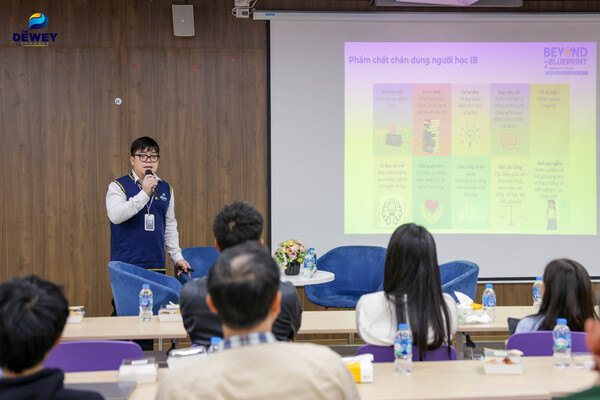
This foundation enables IB students to adapt quickly to international university environments, particularly in the United States, where universities highly value academically challenging coursework, independent thinking, and strong research capabilities.
While IB international schools all follow the global standards set by the International Baccalaureate Organization, each institution establishes its own identity through educational philosophy and school culture. At Dewey, experiential learning is a defining feature. Students not only acquire knowledge but also continuously reflect and apply learning through academic projects, community initiatives, and diverse interdisciplinary activities. Dewey’s environment promotes connection, respects individual differences, and empowers students to maximize their strengths while growing into confident and well-rounded individuals.
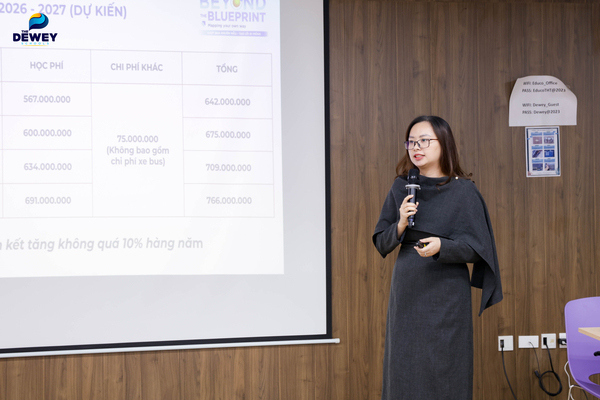
Beyond academic excellence and extracurricular engagement, early career guidance is identified as one of the three strategic pillars that prepare Dewey students for admission to international universities. Ms. Ngô Ánh Tuyết – Head of University and Career Counseling at Dewey – shared that the career guidance pathway for IB students is structured into two phases. The MYP stage (Grades 6–10) helps students build thinking foundations, research skills, and experience international-standard academic projects. During the DP stage (Grades 11–12), students focus on selecting strategic subject combinations aligned with their intended majors, strengthening academic portfolios, and finalizing university pathways.

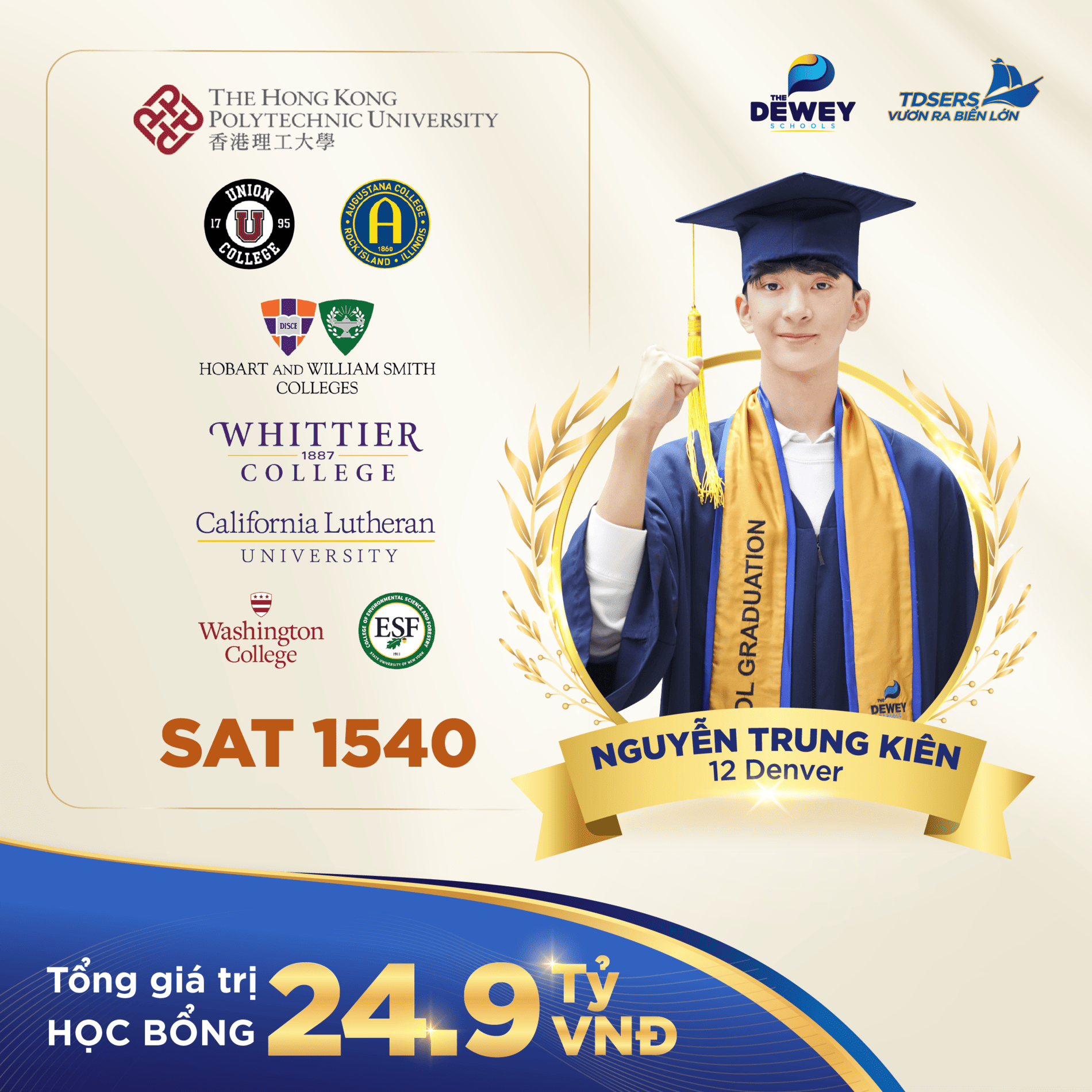
The effectiveness of Dewey’s IB pathway is clearly demonstrated through students’ outstanding achievements. Beyond confidently attaining SAT scores of 1500+, Dewey students have initiated and led numerous research projects and community-driven innovations, including developing AI-powered virtual learning assistants, publishing research supporting diabetes patients in scientific journals, and applying AI in healthcare solutions. These accomplishments strongly reflect the solid academic foundation and real-world application skills of IB students – key factors that empower them to successfully gain admission to prestigious universities worldwide.