
“How did soldiers in the past manage to hit their targets accurately in real battles?” — a question that seems to belong purely to the military field became an engaging challenge for Dewey Grade 10 students in the interdisciplinary Math–IT project “Artillery Battle.” In this project, students stepped into the role of “soldiers,” transforming formulas, parabolic graphs, and quadratic functions into strategic “weapons” on a simulated battlefield.
So how did the Grade 10 students tackle this problem?
In reality, when an object is launched or thrown at an angle into the air, its trajectory is not a straight line but a curve. In mathematics, this curve is known as a parabola — the visual representation of a quadratic function. By observing the firing range through a coordinate plane, students gradually constructed a quadratic equation that matched real-life conditions. From there, they calculated and reasoned to ensure that the projectile could clear a 30-cm-high wall and still land precisely on the target along the most optimal trajectory. Determining the vertex of the parabola allowed them to identify the maximum height of the projectile, while the positive root of the equation indicated the maximum range. Based on these insights, the Dewey “soldiers” continuously adjusted the firing angle and force to improve accuracy.
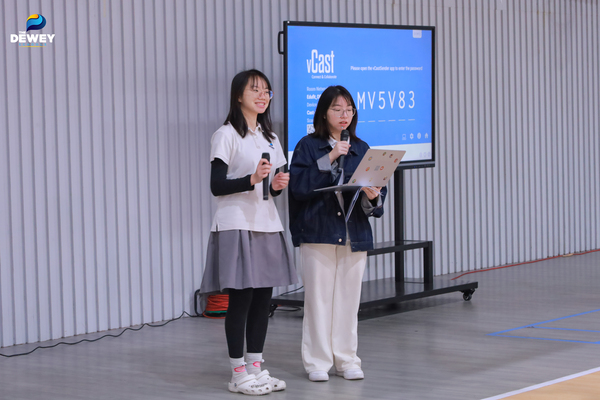
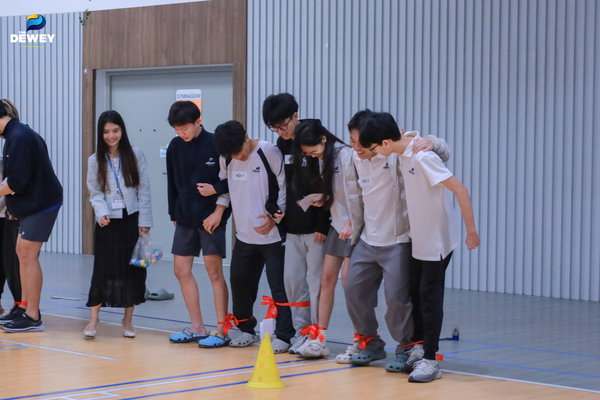
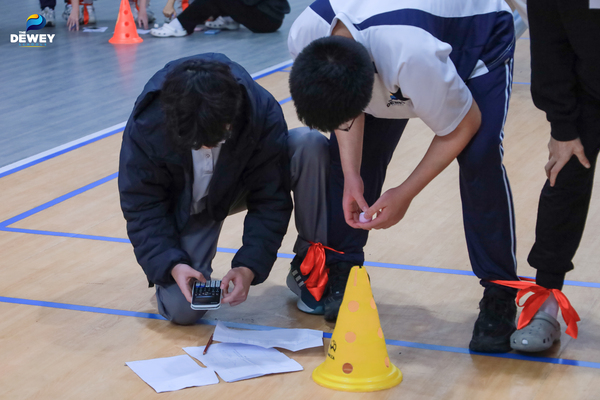
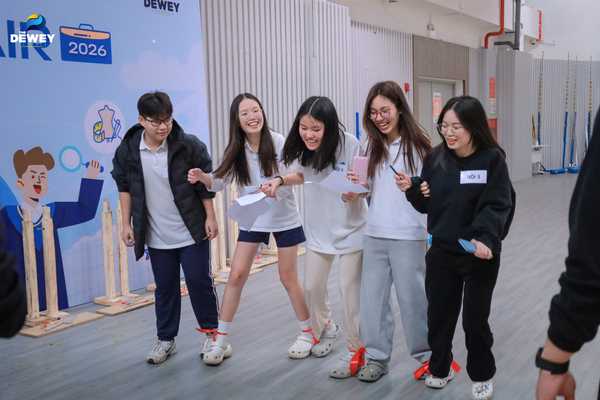
Through this project, students not only learned how to choose an appropriate firing angle to balance height and distance, but also realized that discrepancies always exist between theory and reality — even under ideal conditions. Accepting error margins, conducting repeated trials, and making adjustments helped students develop flexible thinking and approach problems as if they were truly “in combat.” As a result, quadratic functions and parabolic graphs were no longer dry formulas, but became key tools that determined the outcome of the entire “artillery battle.”

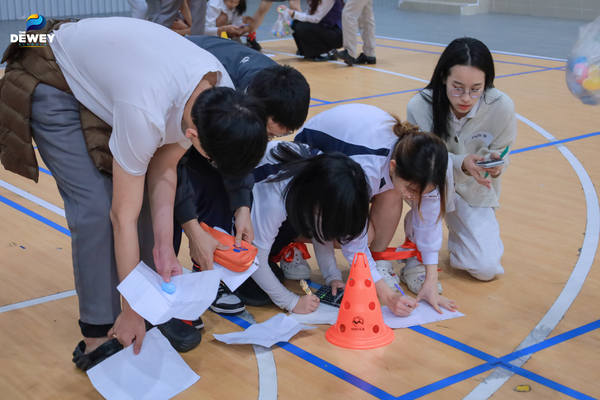
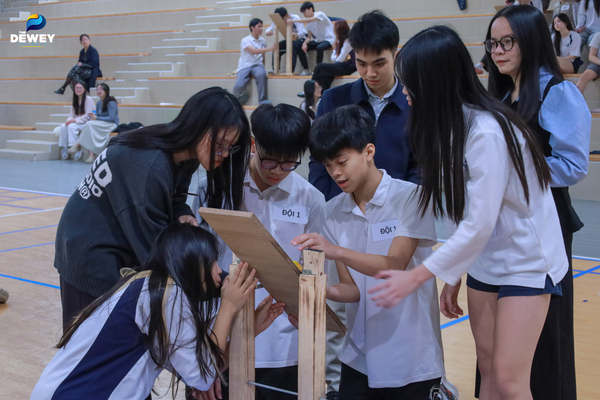

Sharing her experience, Hà An (10 Victoria) said: “This was the first time I got to use a wrench and screwdriver to build a catapult myself. The exciting experience of ‘fighting’ alongside my friends on the artillery field made learning math much easier for me. Beyond developing mathematical thinking and connecting interdisciplinary knowledge, the project also gave us the chance to practice teamwork and problem-solving skills.”

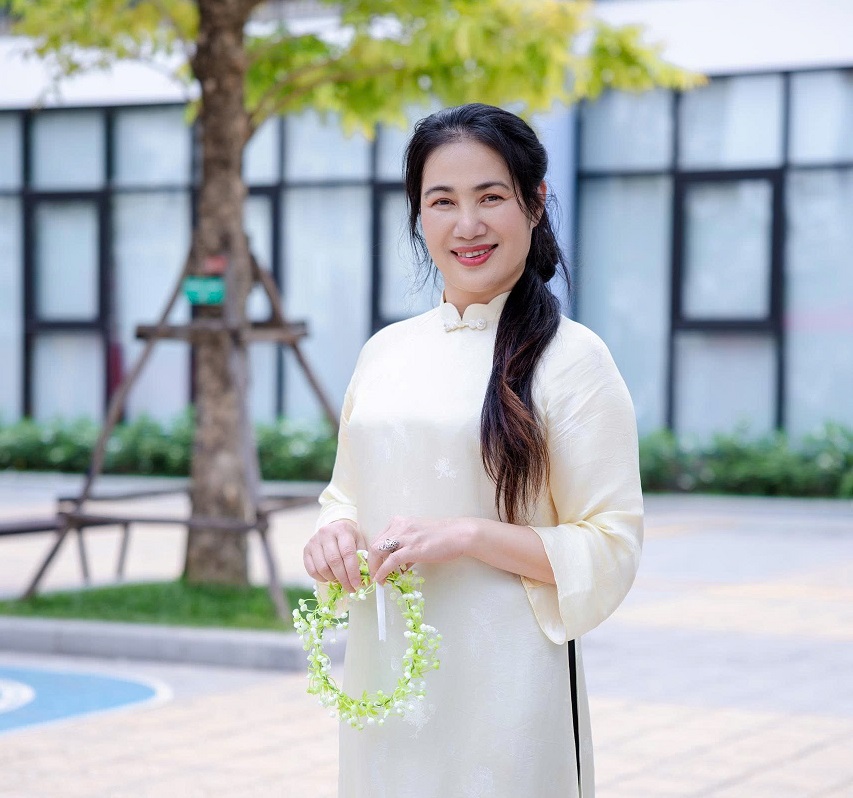
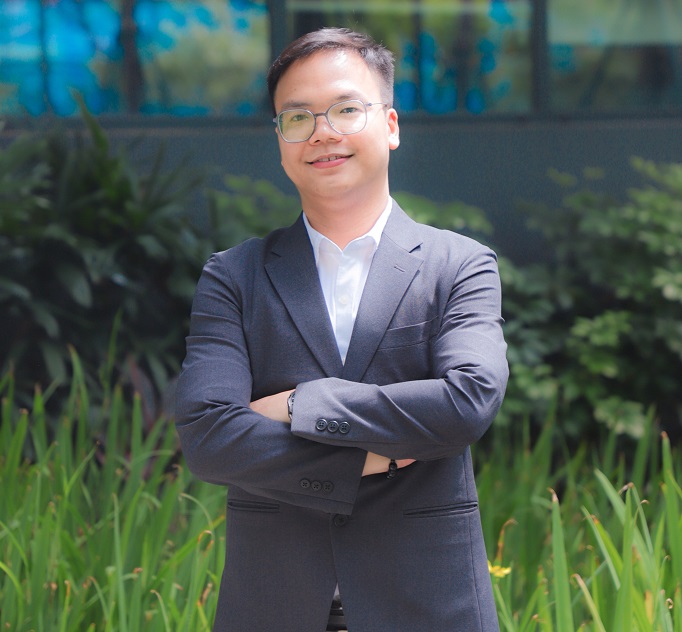
Speaking about the project, Mr. Vũ Việt Cường, Mathematics teacher, shared: “I hope to integrate education about the military’s role into lessons at Dewey. By combining Mathematics, STEM, and military knowledge, I aim not only to help students develop comprehensive thinking, but also to spark their interest in learning about Vietnam’s historical battles.”
—————————-
The “EXPERIENTIAL CYCLE” campaign by The Dewey Schools affirms an educational approach in which experience is not merely a means but the core of learning itself.
Here, every student is placed at the center of their developmental journey—guided to build self-directed learning capacity, independent thinking, and the confidence to take ownership of their own future.
Step into the dynamic world of experiential education here: https://tuyensinh.thedeweyschools.edu.vn/the-experiential…