
“For the child you love, spare no discipline; for the child you dislike, indulge them with sweetness” was once a guiding principle of many generations in Eastern education. In traditional classrooms, the image of the teacher was closely associated with absolute authority: the teacher spoke, students listened; the teacher instructed, students obeyed. A “misbehaving” student was punished. Many adults today still remember classrooms where mild infractions led to reprimands, and more serious ones to ruler strikes, standing in the corner, or kneeling as punishment. Silence and compliance were considered signs of a “good” and well-mannered student.
In Western countries, despite cultural differences, earlier education models also emphasized rigid discipline. Punishment, grades, and public shaming were once commonly used as tools to control student behavior. While teacher-student relationships may have appeared more friendly on the surface, they were still largely one-directional: teachers held authority, and students were expected to comply.
However, alongside advances in educational science and child psychology, this relationship has gradually evolved. Today, in both Eastern and Western contexts, education is shifting from power to connection, from control to understanding, and from punishment to guidance.
This shift has transformed not only how teachers communicate with students, but also how schools create emotionally safe learning environments – places where students are respected, heard, and guided toward growth, rather than merely motivated by fear of punishment. It is within this context that Positive Discipline has become a foundational philosophy and guiding compass for The Dewey Schools in building a classroom culture rooted in humanity and respect.
Positive Discipline in Schools: Core Principles
When Positive Discipline is mentioned, it is often misunderstood as simply “no punishment,” “no scolding,” or even “no discipline at all.” Some mistakenly believe it means being permissive or indulgent toward inappropriate behavior.
In reality, Positive Discipline does not begin with punishment. It begins with adults seeking to understand the underlying reasons behind a child’s behavior and teaching children how to self-regulate. This approach is grounded in the Individual Psychology theory of Alfred Adler (1870-1937) and further developed in education through Rudolf Dreikurs’ (1897-1972) concept of Democratic Discipline.

According to Alfred Adler, all human beings – especially children – share two fundamental social needs: the need to belong and the need to feel significant. From this perspective, misbehavior is not a sign of a “bad child,” but rather an attempt to meet unmet needs for connection, recognition, or control. Adler emphasized that all human behavior is purposeful, not random or meaningless. Therefore, punishing surface behaviors without understanding their underlying purpose cannot lead to sustainable change; children will simply adopt other forms of misbehavior until their needs are met.
For example, when a student frequently talks or disrupts lessons, the traditional approach may label the child as mischievous or disruptive, leading to warnings, point deductions, punishment, or removal from the classroom. While fear may temporarily stop the behavior, the root cause remains unresolved.
Through an Adlerian lens, such behavior may stem from a desire for attention, connection, or a sense of presence within the classroom. When teachers adjust their perspective and help students meet these needs in constructive ways – such as assigning supportive roles in group activities, inviting participation at appropriate moments, or offering encouragement when rules are followed – disruptive behaviors often decrease significantly. When students feel respected and valued contributors, they are more likely to cooperate and self-regulate. Conversely, when children feel excluded, shamed, or unheard, misbehavior often becomes their only way to “be seen.”
Building on Adler’s theories, Rudolf Dreikurs translated these ideas into educational practice through the concept of Democratic Discipline. He believed that classrooms should function as miniature democratic communities, where students not only follow rules but also understand their purpose, participate in creating them, and take responsibility for their own behavior.
A classroom grounded in Positive Discipline is characterized by five core principles:
1. Helping students feel a sense of belonging and significance
Positive Discipline creates an environment where students feel they are valued members of the classroom community. When students feel connected, heard, and acknowledged, cooperative behaviors increase while disruptions decrease.
2. Rooted in mutual respect and encouragement – balancing kindness and firmness
Positive Discipline is built on respectful, two-way relationships between teachers and students. Teachers demonstrate empathy and understanding while maintaining clear boundaries and expectations, creating a learning environment that is both safe and structured.

3. Focused on long-term educational effectiveness
Rather than simply stopping behavior in the moment, Positive Discipline seeks to understand what students are thinking and feeling, and then applies logical consequences that allow students to learn from experience. This approach fosters self-regulation and better decision-making over time.
4. Teaching essential social and life skills
Classroom discipline is inseparable from teaching vital social-emotional skills such as respect, empathy, cooperation, problem-solving, and meaningful contribution to the classroom and school community.
5. Encouraging students to recognize their own capabilities and responsibilities
Positive Discipline provides students with appropriate choices, opportunities for participation, and shared responsibility. Through this, students develop autonomy and confidence in themselves.
Ultimately, Positive Discipline is not about controlling children, but about teaching them self-control; not about making them afraid of mistakes, but about helping them learn from mistakes within a respectful and clearly structured environment. Through this approach, students develop essential life skills such as self-regulation, problem-solving, collaboration, and accountability.
Positive Discipline in Dewey Classrooms
At Dewey, Positive Discipline is not treated as a standalone classroom management strategy, but as an integral part of education itself – woven into daily interactions, language, and relationships between teachers and students. Discipline does not appear only in response to misbehavior; it is embedded from the very beginning in how teachers build relationships, organize classrooms, and create emotional safety.
From the very first orientation week of the school year, students experience the spirit of Positive Discipline through teacher-facilitated class meetings. Instead of teachers imposing classroom rules, students are invited to reflect and share:
- “What kind of classroom do you want to learn in?”
- “What helps you feel safe and happy in class?”
- “What do we need to do to respect and support one another?”
These open-ended questions help students connect with their own needs while recognizing that their voices and emotions matter.
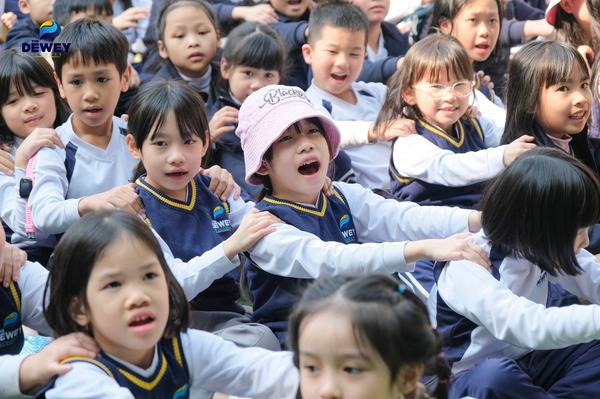
From these discussions, students collaboratively propose, agree upon, and establish classroom principles. These principles are expressed in positive language rather than commands, reflecting shared aspirations rather than imposed rules. Creating and decorating the classroom principles board is not only a creative activity, but also a way for students to visibly commit to their classroom community. This shared reference point allows teachers and students to revisit expectations together when behavior needs adjustment – without resorting to personal reprimands or punishment.

This early foundation of Positive Discipline becomes especially meaningful when challenges arise later in the school year. Discipline truly comes to life not on the wall, but in moments when the classroom faces difficult behaviors – such as the story of a sixth-grade student who once caused considerable concern among classmates.
He was frequently asked to leave the classroom due to emotional outbursts. A casual comment from a peer or a decision he perceived as unfair was enough to trigger shouting, defiance, or refusal to follow instructions. His sudden anger made classmates fearful, and they gradually began to distance themselves from him.
Ironically, the more he was punished, the more convinced he became that he was being treated unfairly. In his eyes, teachers only noticed his mistakes, while others behaving similarly went unchallenged. He began to see himself as a “problem student,” constantly scrutinized and judged. Teacher-student relationships grew tense, and the classroom became an unspoken battleground.
Had this path continued, the student might have become increasingly disengaged from learning. But at Dewey, the story took a different turn.
When Discipline Is No Longer a Power Struggle
Instead of reacting impulsively, teachers chose to pause and understand. They met, shared observations, and analyzed the student’s behavior through the lens of Positive Discipline and the theory of the four mistaken goals of behavior. They recognized that his anger was not driven by a desire to disrupt, but by a deeper need for power and recognition. Feeling unheard, he sought control through confrontation.
Change began when teachers adjusted how they interacted with him. Rather than issuing commands, they offered limited, respectful choices:
- “You have two options: you can start the assignment now, or you can take five minutes to calm down and then rejoin your group. Which do you choose?”
- “Would you like to share your opinion now, or write it down and discuss it with me at the end of class?”
- “Do you prefer working independently or with a group for this task? I respect your choice.”
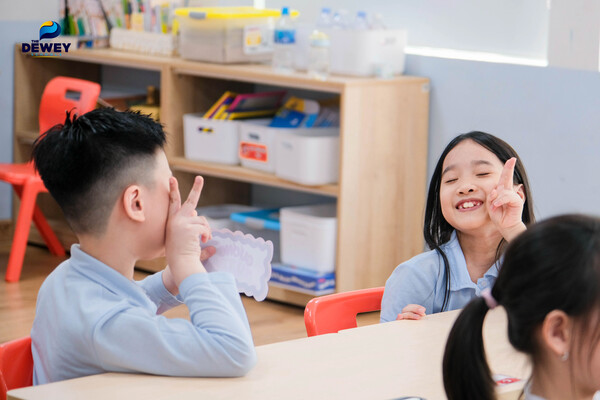
When the student expressed frustration about perceived unfairness, teachers listened rather than argued:
“I understand that you’re feeling angry because you believe the situation isn’t fair. Right now, we are in the middle of the lesson, so I can’t pause to address this fully. Would you be willing to talk with me after class so we can work through it together?”
These choices preserved boundaries while allowing the student to feel respected and empowered within a safe framework. At the same time, the classroom – already accustomed to shared principles – functioned as a supportive community where discipline returned to collective agreements rather than individual blame.
Teachers also created opportunities for the student to demonstrate his strengths in positive ways: leading group activities, taking responsibility for classroom tasks. When authority was granted appropriately, his need for control gradually transformed into a sense of responsibility.
Quiet Change, Lasting Impact
The transformation did not happen overnight. But emotional outbursts became less frequent. The student learned to pause, articulate his emotions, and seek solutions rather than erupt. Most importantly, the teacher-student relationship was repaired. Once feeling targeted, he became open, cooperative, and deeply connected to teachers who chose trust and guidance over punishment.

This story illustrates that Positive Discipline at Dewey is not confined to classroom posters – it lives in daily pedagogical decisions, in moments when teachers choose connection over confrontation.
This is just one of hundreds of examples of how Dewey educators apply Positive Discipline every day. It is how classrooms become positive learning communities where every member has a voice and a role; where teachers do not lose authority, but shift from “controllers” to “guides”; where schools become truly human-centered learning environments; and where discipline is not meant to harm, but to educate and nurture growth.
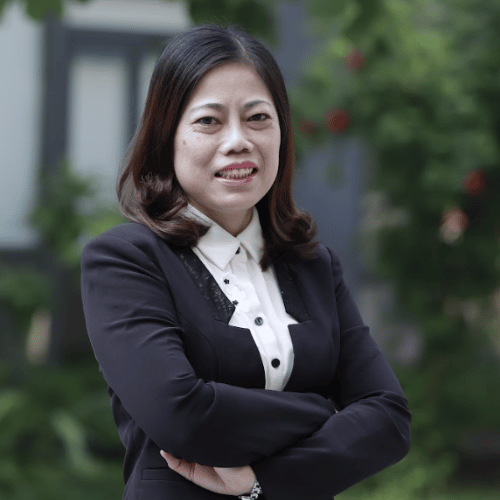
Article written by Ms. Nguyễn Hương Mai – Educational Research & Pedagogy Council (ERPC), The Dewey Schools.