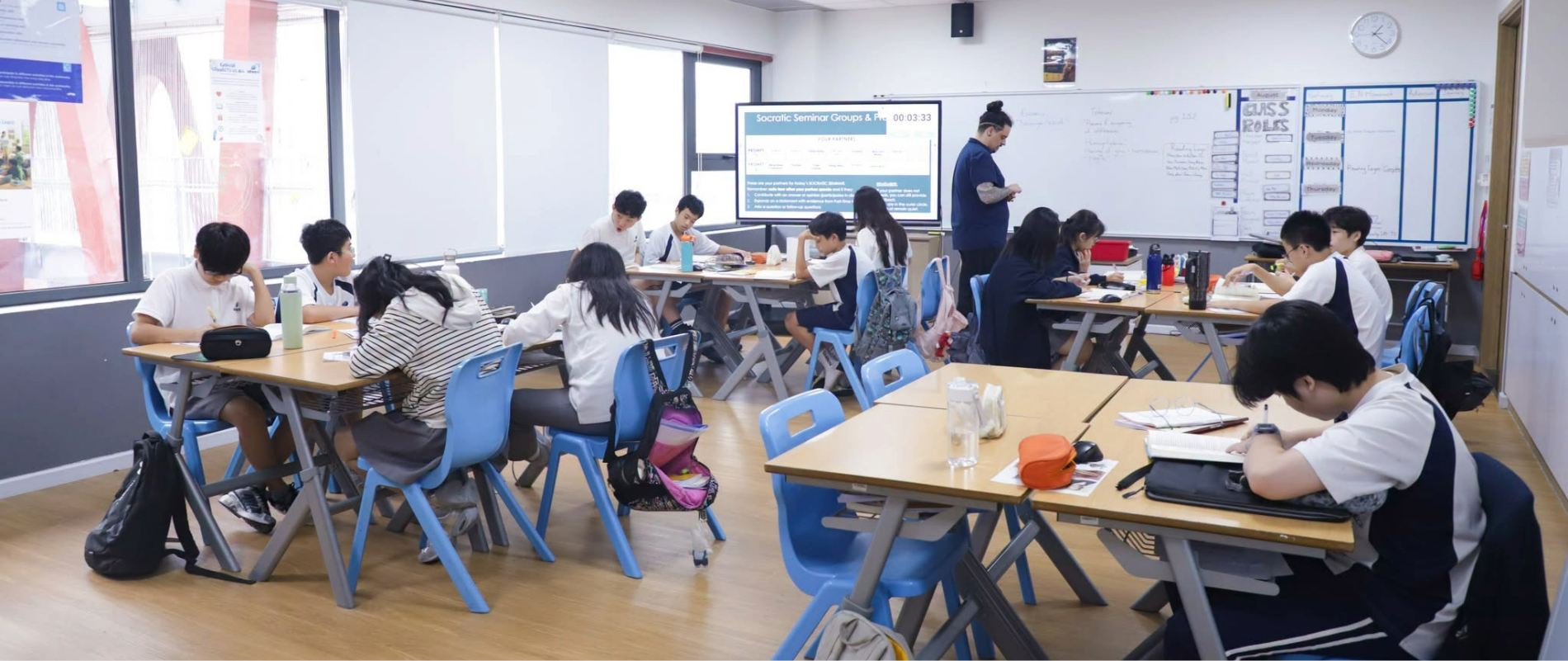

Every year, Mount Vernon School (USA) – The Dewey Schools’ strategic partner – conducts regular visits to Dewey campuses, reaffirming its commitment to enhancing teaching quality and ensuring an international-standard learning environment. During its latest visit to Dewey Tây Hồ Tây, alongside classroom observations and professional meetings, Mount Vernon School (MVS) also delivered a training session on differentiated instruction for Dewey teachers.



Drawing on real-world experience, participating teachers learned how to design assessments based on the Seven Principles of Competency-Based Education (CBE), transforming assessment into a meaningful, positive, and empowering learning experience. Working in groups, they discussed and analyzed learning objectives, and developed effective, personalized approaches to meet students’ individual needs.

Mr. Jared Colley – Director of Academic and Innovation at MVS – emphasized: “Grades are only a small part of assessment. The most valuable data comes from specific feedback that helps students understand their competencies and know how to improve.” He likened assessing skills and knowledge to teaching a child to play baseball: students observe, practice, receive continuous feedback, and improve step by step. This approach fosters confidence, strengthens students’ abilities, and enables them to discover their full potential.

For new teachers, Ms. Kristy Lundstrom – Head of School and Executive Director of MVS – introduced core strategies in differentiated instruction such as flexible grouping and station rotation. These strategies not only personalize learning but also create a rich, diverse classroom environment that encourages critical thinking and creativity.
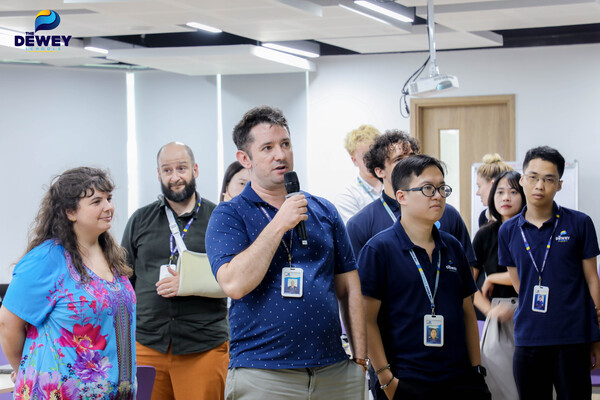
The training not only equipped teachers with new instructional skills but also inspired them to continue innovating teaching practices at Dewey. Ms. Judy Ann Torres – English teacher at Dewey Tây Hồ Tây – shared that the session was also an opportunity for teachers to listen, exchange ideas, compare methods, and adjust their own teaching practices, thereby enhancing instructional quality and better meeting students’ needs.