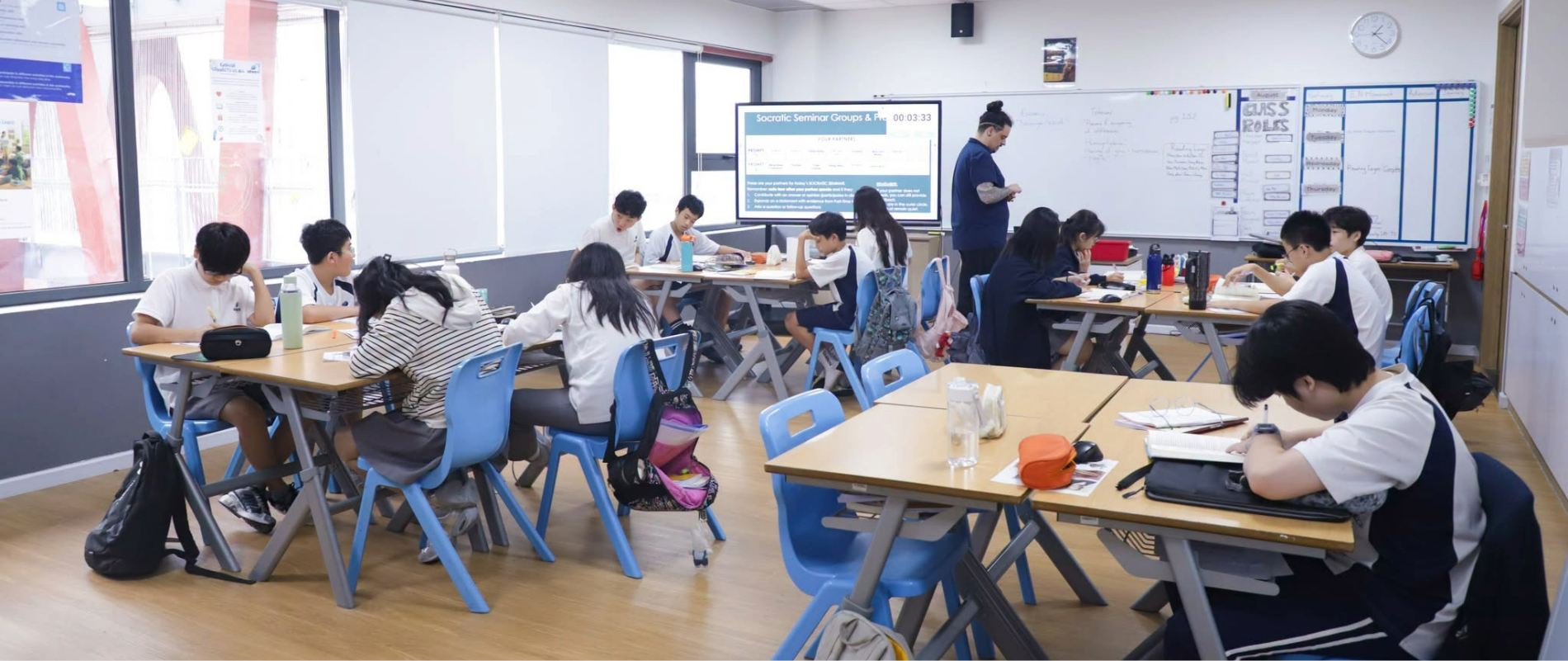

Matter transformation can take place anywhere. Sometimes it is easy to spot—such as ice melting into water or clay changing shape—while at other times, it reveals far more intriguing phenomena in the presence of catalysts or within different environments. In their recent Science lesson, the budding “detectives” of class 8Pori embarked on an exciting journey to decode these mysteries through a series of hands-on experiments.
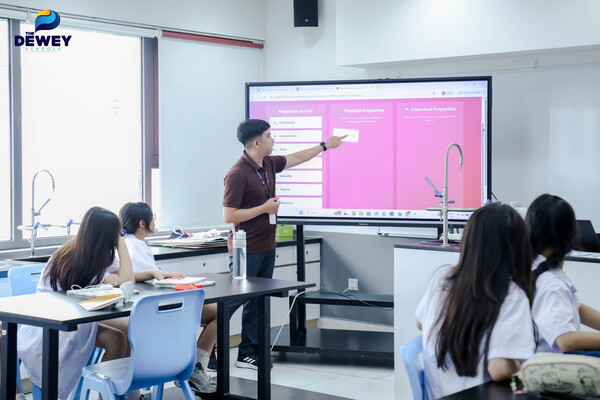
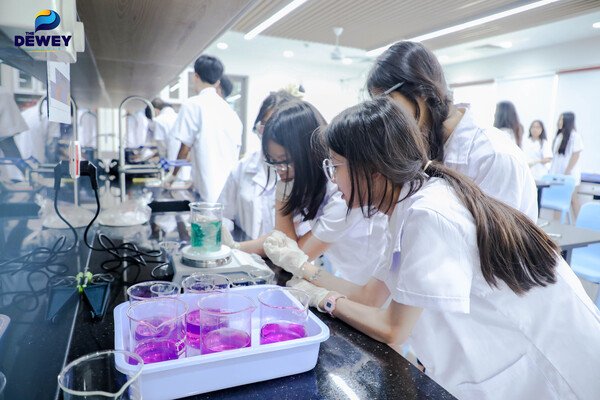
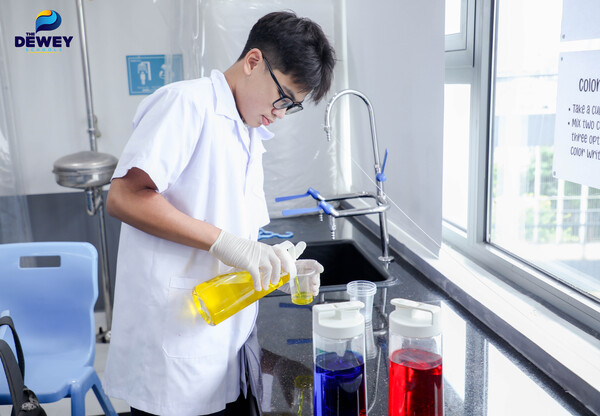
The laboratory was arranged into four rotating stations. At each station, students observed and conducted experiments including: creating a volcanic eruption with hydrogen peroxide and soap solution; showcasing a “color-changing magic trick” through redox reactions; inflating balloons using baking soda and vinegar; and forming rainbows with colorful candies. The classroom echoed with laughter and gasps of amazement as the young investigators uncovered new scientific clues at every turn.
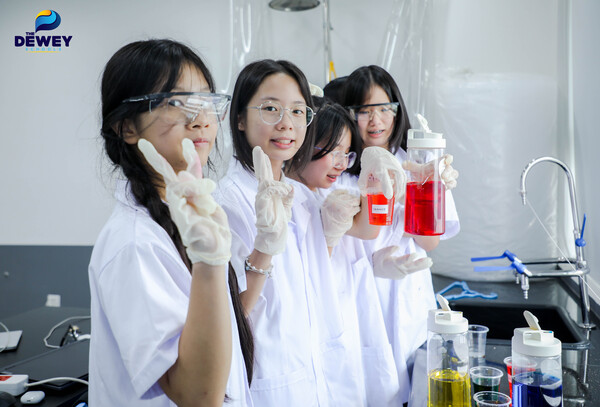
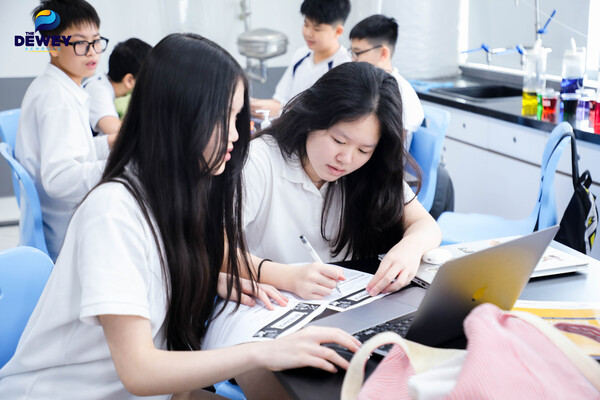
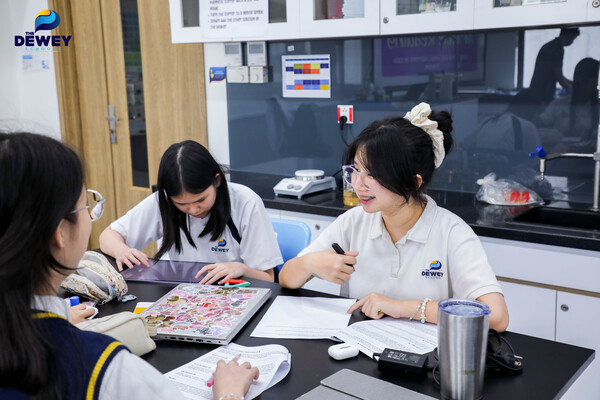
Through this process of “investigation,” students actively connected real-world observations with scientific concepts. Thảo Chi (8Pori) reflected: “I discovered that chemical reactions occur when matter undergoes transformation. For example, mixing baking soda with vinegar releases carbon dioxide, inflating the balloon; or the redox reaction between NaOH, KMnO₄, and sugar produces a new green-colored substance. In contrast, when candy dissolves in warm water, only dissolution and color diffusion occur without creating a new substance—that’s a physical change.”
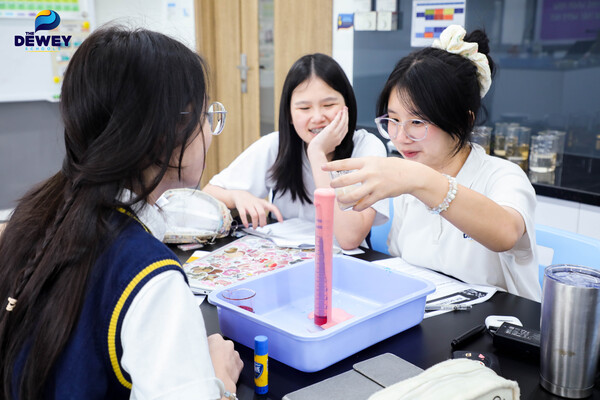
At The Dewey Schools, experiential learning lies at the heart of our educational philosophy. This approach not only sharpens students’ skills in observation, critical thinking, communication, and scientific reasoning, but also nurtures their passion for inquiry and discovery.